
What to Know Before You Buy Warehouse Inventory Drones
If you’re evaluating inventory drones, you’re going to run into claims that haven’t been true for years. This page covers what’s actually running in production warehouses today, where the real limits are, and ten questions that’ll tell you which kind of system a vendor is selling you.
Do warehouse inventory drones actually work?
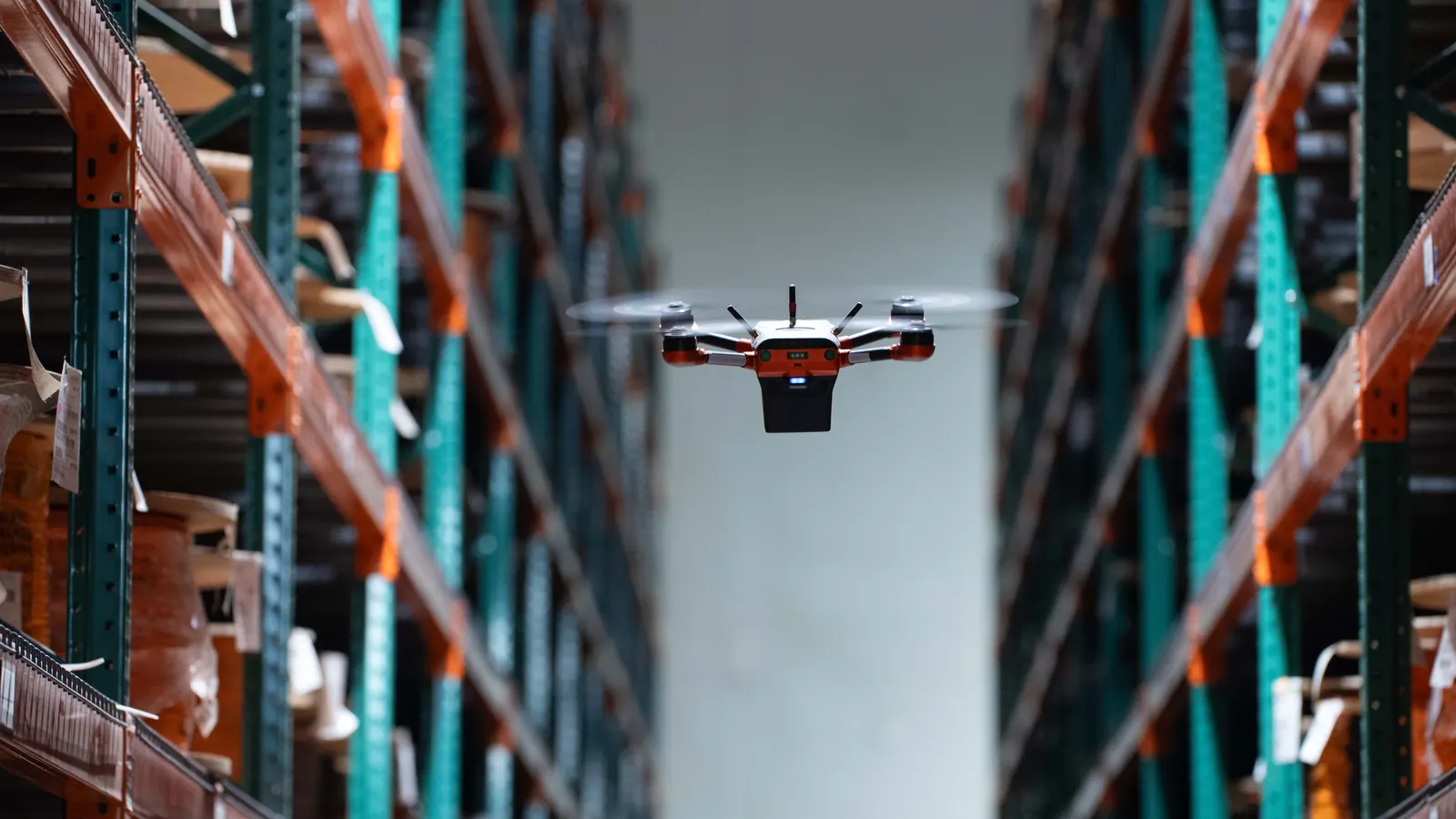
Yes, of course. Corvus One® drones are flying in production warehouses across 26 states, Canada and Mexico right now, counting pallet positions in racked aisles, in bulk storage with no racking at all, in freezers at minus 20F. No localization stickers on the racks, no localization beacons on the ceilings, no Wi-Fi or GPS. Localization infrastructure is the hardware some drones need in order to figure out where they are inside a building, and it’s most of the reason those early installs dragged on for months.
So why does the question keep coming up? Because plenty of what’s on the market still works the old way. Reflective markers stuck to every rack upright. Battery-powered beacons mounted to the ceiling. A trained operator walking the aisle behind the drone, swapping batteries every twenty minutes. If that’s the demo you sat through, you walked out with a reasonable opinion about the whole category. A lot of operations leaders did exactly that and never looked at it again.
Supply Chain 24/7 ran a piece by Bridget McCrea on the misconceptions that stuck around after that first generation. Our co-founder, Jackie Wu, was interviewed for it and you should check it out. Jackie’s quotes on this page come from that interview. Here is where that article left off, because a few of those misconceptions are still floating in the ether.
Why people think drones need babysitting
“I think folks are used to the previous generation of drones, where you had to put up all these stickers or have people babysitting them.”
Jackie Wu, Co-Founder, Corvus Robotics, speaking to Supply Chain 24/7
Jackie is talking about localization infrastructure, which is the hardware some drones need in order to know where they’re at inside a building. Stickers on the rack uprights, reflective markers, battery-powered beacons mounted to the ceiling. Systems built that way are still being sold today, which is why that perception is still around.
So, yes, some drones need babysitting but not ours.
Corvus One navigates GPS-denied indoor space using 14 onboard cameras, computer vision, and our proprietary Large-World Model (trained on millions of real-world interactions from actual warehouses). The only hardware that goes into the building is a landing pad mounted at the end of an aisle. No localization beacons, no navigation stickers on the racks, nothing stuck to an upright that an associate has to go reposition on a lift every time the layout changes.
Which matters long after the install date because any system that depends on localization infrastructure inherits every change made to the building layout.
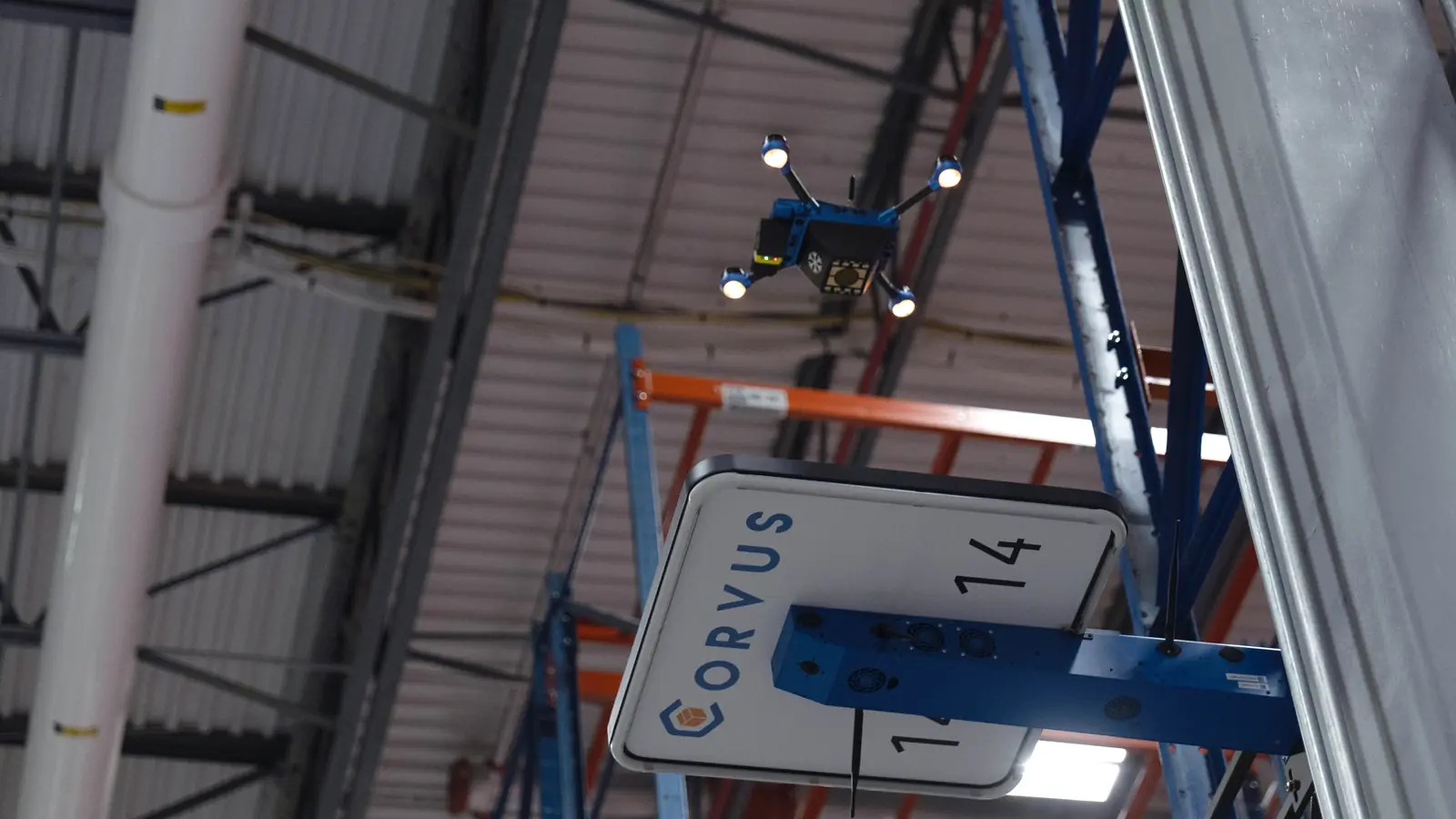

“One of our favorite aspects about Corvus, and a big part of why, four years ago, we started talking with Corvus is the fact that we don’t have to manipulate these drones. They sit on their landing pad. They charge themselves, they fly themselves, they dock themselves. We don’t touch the drones at all.”
Staci Americas
Install runs about a week, and nobody has to stop working
“Now drones are working really smoothly. We can install them in as little as a week, and you don’t have to put up any beacons or infrastructure.”
Jackie Wu, Co-Founder, Corvus Robotics
What operations leaders are really protecting here is uptime, and that is a key driver behind our solution. Look, there’s obviously a market for multi-million dollar robotics or fixed automation solutions. But looping autonomous inventory drones, particularly ours, into this category is false. We’re a low-cost, value-add, no-brainer solution because we can deploy quickly without interruption and without breaking the bank. The faster you deploy, the sooner you start realizing your return on investment.
Dermalogica deployed Corvus One at their Carson, California headquarters, the primary DC serving retail, wholesale and e-commerce globally with no downtime during deployment. MSI Surfaces sites have gone live in a few days, with fully autonomous flights on the first day.
Southern Glazer’s Wine & Spirits runs 40+ drones across nine distribution centers, and every one of those DCs kept shipping product out the door during deployment.
Flying over a working floor
“The drones ‘see’ people and forklifts and either move out of the way or climb to a safe height. The safety question isn’t whether drones can detect activity below. It’s how they respond to it in real time.”
Jackie Wu, Co-Founder, Corvus Robotics
What separates one system from another is what happens in the half second after detection, and that comes down to obstacle detection and flight control built specifically for indoor warehouse flight. MSI Surfaces is a good example. Corvus One flies missions during operating hours across their 8-state distribution network, with obstacle detection handling forklift traffic instead of the drone’s schedule working around operations. Inventory accuracy there went from 80% to 99%, and cycle counting is 20x faster than the once-a-year physical audit it replaced.
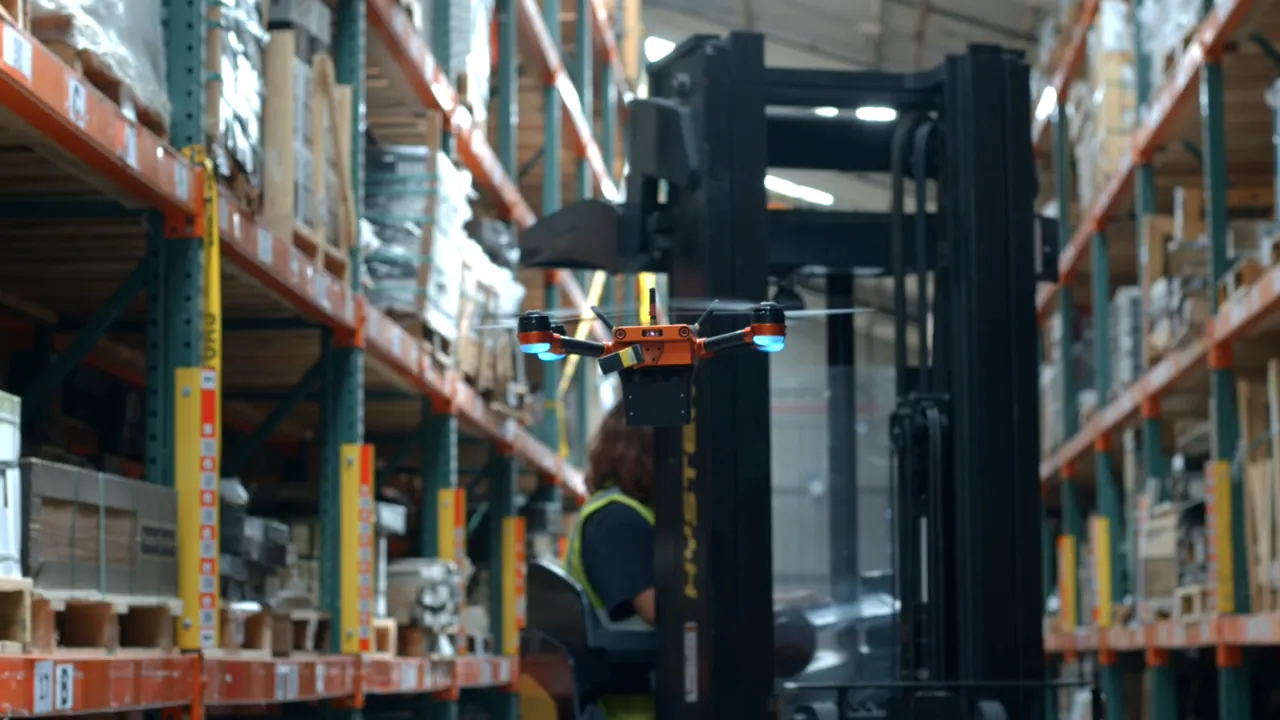

“In other operations, if you are super busy, you might pull that inventory person to go fill orders. In this scenario, there is no pulling that person. The drone flies no matter what.”
MSI Surfaces
When the drones fly is your call. Some customers run flights during low-activity windows throughout the day, on breaks or over lunch, or whenever the floor slows down. Some run them overnight with nobody in the building. Some run them on weekends. Staci Americas runs lights-out flights overnight across multi-client facilities in Georgia and New Jersey, so their inventory teams can correct discrepancies before first shift starts.
The choice is yours.
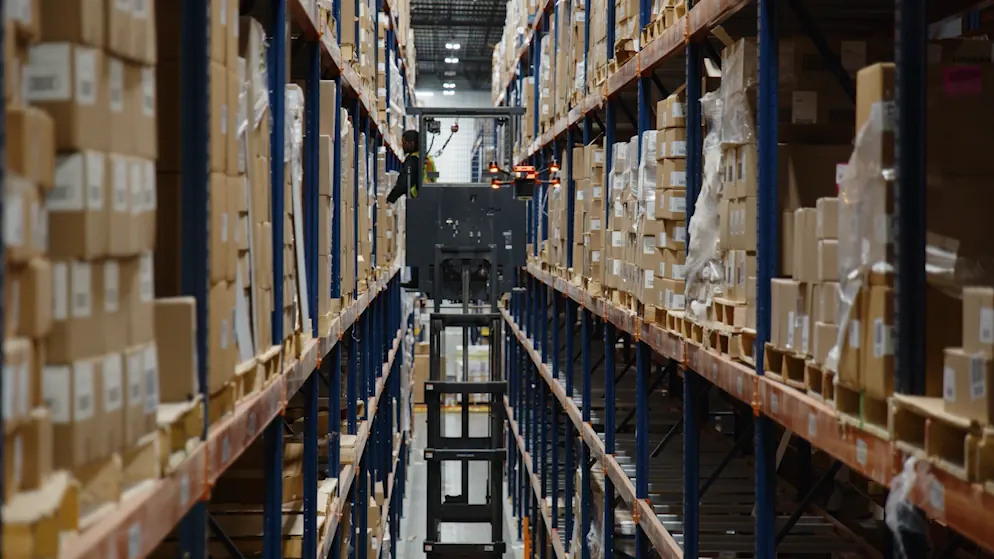
“Being able to run inventory checks 24/7 without operator assistance has been a game changer. The lights-out capability allows our inventory teams to correct discrepancies off-shift and pre-shift before production starts each day, limiting fulfillment delays and production impacts.”
Staci Americas
Racking isn’t a requirement, and neither is a wide aisle
“There’s a perception that you need racks for the drones to fly. But ours can fly in bulk environments where there are no racks.”
Jackie Wu, Co-Founder, Corvus Robotics
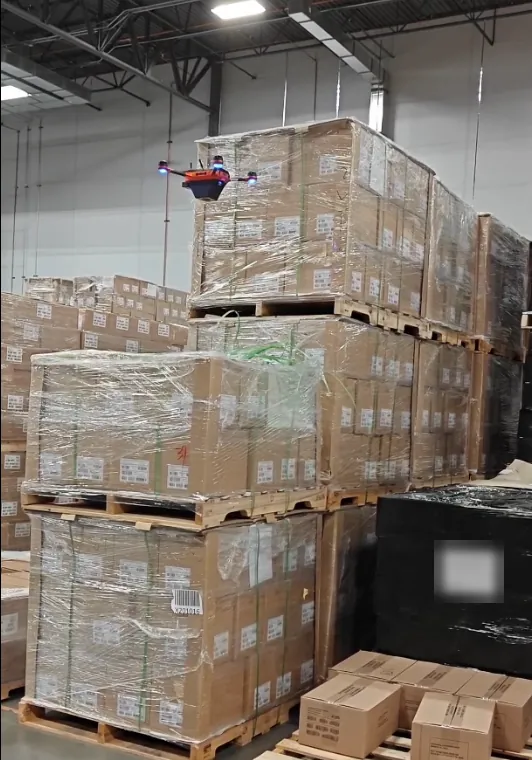
A lot of companies rule the technology out over this, and they shouldn’t. Corvus One flies bulk environments with stacked pallets and no racking at all. Bulk and floor-stacked areas generally have marked lanes and a record in the WMS, so the inventory isn’t invisible on paper. Verifying it is the part that takes an associate walking lanes with a scanner, and that tends to happen less often than anyone would like.
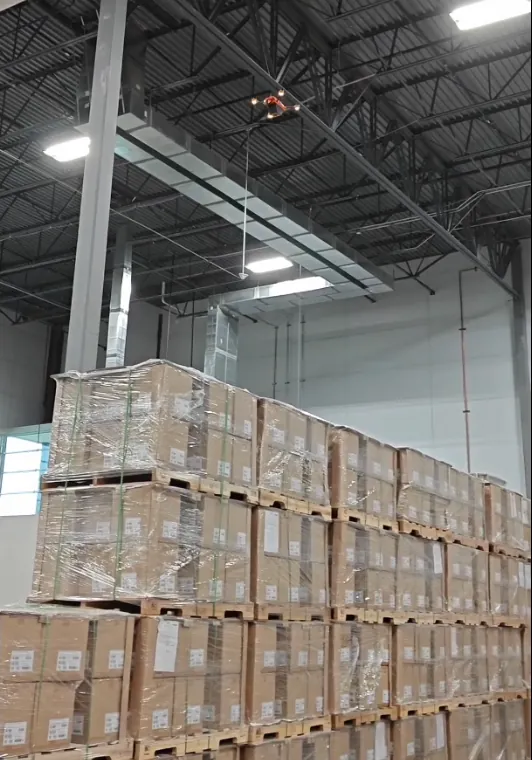
Very narrow aisle is the other one. Corvus One flies VNA down to four feet. Some of that is the drone being about the size of a basketball, but the bigger factor is the 14 cameras giving it a wide enough field of view to capture a full bay from close range while safely navigating the short aisle width.
You will also hear that the racking and shelving have to be spotless before a drone can fly. Fair, up to a point. Loose shrink wrap is a real issue, and so is anything light enough to get pushed around by the rotors. But every system has its version of this. A ground robot has the same problem with debris in the aisle, and so does a forklift, and so does the associate who trips over it. Tightening up housekeeping helps all of them. If Corvus One is what finally gets a facility to do it, we’ll take it.
Nobody on the payroll runs the drones
“People think they’ll need someone babysitting the drones. The reality is that they fly fully autonomously and nobody has to set them off every time.”
Jackie Wu, Co-Founder, Corvus Robotics
No pilot. No operator. No battery swapper. No standing IT commitment. That is the entire business case. If Corvus One needed somebody to run it, then it wouldn’t be truly autonomous, and you’d still need some labor to support cycle counting.
But Corvus One is autonomous, so the hours a team used to spend counting go back into the projects every facility’s been sitting on for who knows how long.
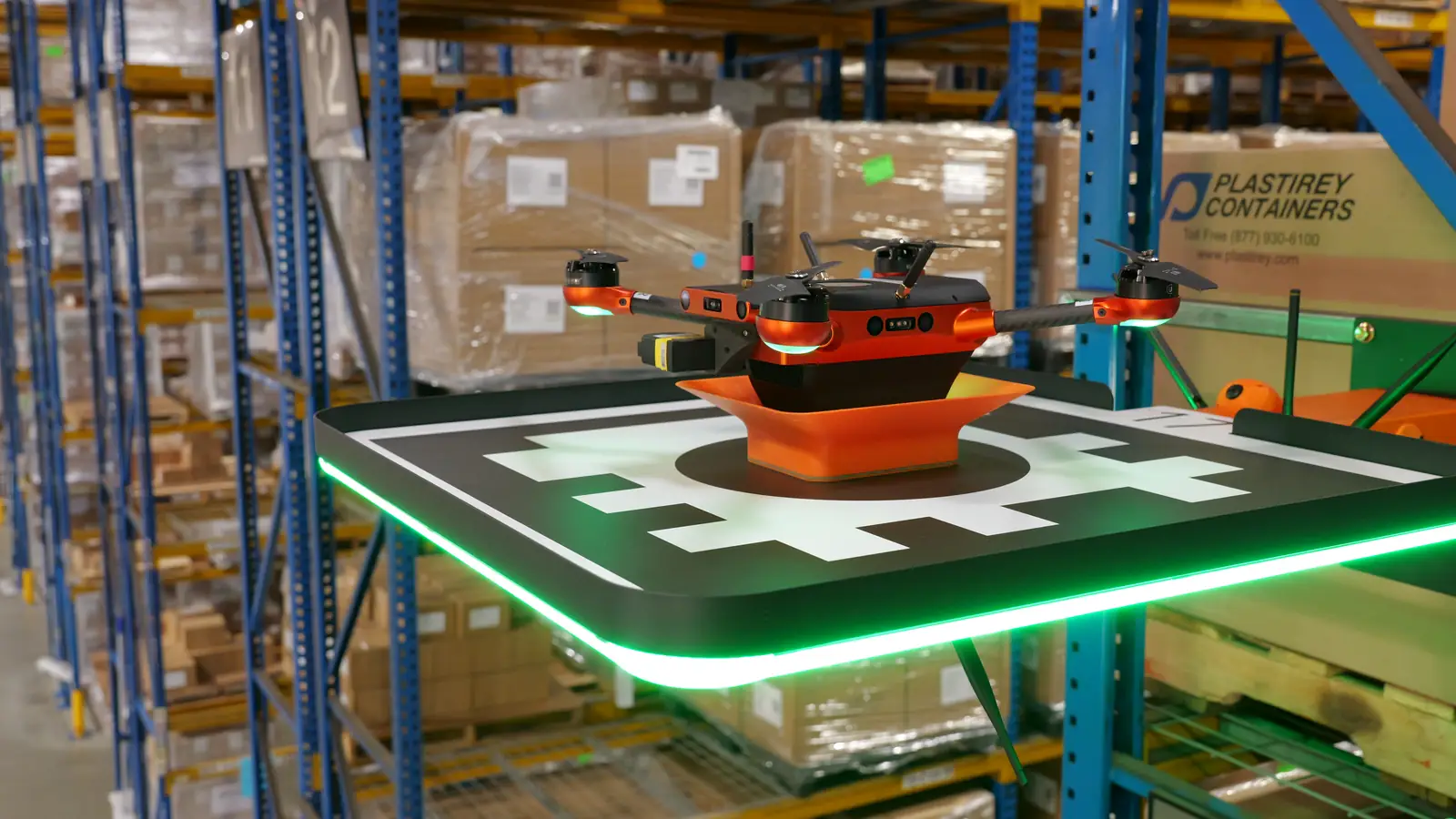
LAPP USA in Brownsburg, Indiana had 12.5% of its workforce tied up in counting before deployment. That team is two associates now, a 60% labor savings, with nightly scans producing a discrepancy report before anyone walks in the next morning. Weekend overtime for counting went away entirely.
GNC went from 20 people in inventory control down to 13 across their Indianapolis and Phoenix DCs, 450,000 square feet and 40,000 inventory locations between them, and increased counting frequency to 10 to 12 times a year in the process. Seven or eight flights a day, about 30 minutes each, and the material handling equipment stopped getting pulled off the floor for scanning.

“I like the Corvus Robotics drones because they are out of sight, out of mind. They’re doing things that there’s really not a lot of value to an individual on, but to the business, it’s priceless. We were able to realize the benefits of the drone the day that it started flying.”
GNC
Battery life and scan speed
Flight time comes up in almost every evaluation, usually raised by vendors who aren’t selling drones.
The framing assumes you’re buying one drone and living with its battery. Corvus delivers an autonomous inventory management solution that uses drones to capture the data, and the system (keyword, system) gets sized to the operation. How often does the facility need its inventory counted? What’s an acceptable timeframe for a full inventory turn of the building? When can the drones fly? Those answers help set the number of drones and the mission schedule. The drones charge themselves on their landing pads in between. If you’re “worried” about battery life, it’s because you’re thinking like a consumer buying a DJI drone from Walmart or wherever. Think bigger. We provide a solution tailored to your operation, not “one” drone.
On scanning being slow, that misconception is just out of date. Flight control, stabilization, camera optics, and physical AI have all come a long way in the last few years, and we train the drones on each customer’s own label formats, storage formats, and facility layouts, which makes the per-bin scan quick. A better question to ask is, how fast are you currently recovering lost or misplaced inventory? Our guess is, not very fast or you wouldn’t be reading this.

“We’re recovering inventory about 60% faster than before so that’s fewer exceptions, fewer canceled orders, and happier customers.”
ASICS America
There’s a reasonable question underneath all of this about how much scanning is actually useful. A building making roughly 100 pallet moves a day doesn’t get much out of a system capturing 100,000 scans a day. Most of that capacity goes to rescanning pallets nobody touched. So the question is, do you really need that?
What it costs
Corvus One and Corvus Trident™ are sold as a Robotics-as-a-Service subscription. No capital equipment purchase, and no localization hardware to buy, install, and then maintain for the life of the system.
Compare that to the rest of the automation market. Conveyor and sortation builds or goods-to-person systems run well into seven figures and can take a year or more before they return anything. Corvus sites go live in days and start finding inventory the second week.
Corvus One drones are affordable, low maintenance, and quick to install. The payback shows up in labor hours that go back to the operation:



Accuracy, compared to counting it by hand
A manual cycle count only gives you a number. An autonomous count gives you a number plus photo and video evidence of the exact location it came from, and that evidence is crucial for training, auditing, and compliance.
Southern Glazer’s found more than 35,000 verified discrepancies across 5,000+ flights and nine DCs. Those were discrepancies a quarterly manual process simply wasn’t catching, surfaced by moving from quarterly validation to biweekly. Six times the visibility.
“By increasing the frequency and precision of our reserve inventory validation, we are identifying issues earlier, improving fill rates, and enabling our teams to focus on proactive problem solving instead of reactive counting.”
Southern Glazer’s Wine & Spirits
Frequency is key. Counting twice a year only tells you what was true on two days out of 365.
10 questions to ask any vendor
Ask all of these, including of us.
- Does anything have to be mounted to the racks? Ask specifically about localization beacons and navigation stickers, because the answer varies wildly between systems sold as the same thing.
- Does a person operate it, launch it, walk behind it, or swap its batteries?
- Does the floor or the shelving need to be cleared or prepped before it runs?
- What does it do when it detects a person or a forklift, and how fast does it do it?
- Will it fly bulk storage with no racking?
- What’s the narrowest aisle it works in?
- Does it operate below freezing?
- Who designed and built the robot, and was it built for indoor warehouse work or adapted from something else?
- Does it capture photo and video evidence of every count, or just hand over a number?
- How long has the longest deployment been running, and will they give you that customer’s name and phone number?
Pay close attention to the answer on number ten. Ask for a customer who has been running the system for years, get their phone number, and call them.
Corvus One warehouse inventory drones work. They’re flying nightly in beverage distribution, retail, 3PL, building materials, industrial manufacturing, sub-zero grocery, and plenty of other operations that didn’t change their racking, their barcodes, or their operations to make it happen.
The honest caveat is that “warehouse drone” covers a lot of ground right now. Ask the questions above and you’ll have a better understanding of what’s actually out there on the market right now.
We’re here whenever you’re ready to chat.
More News & Content
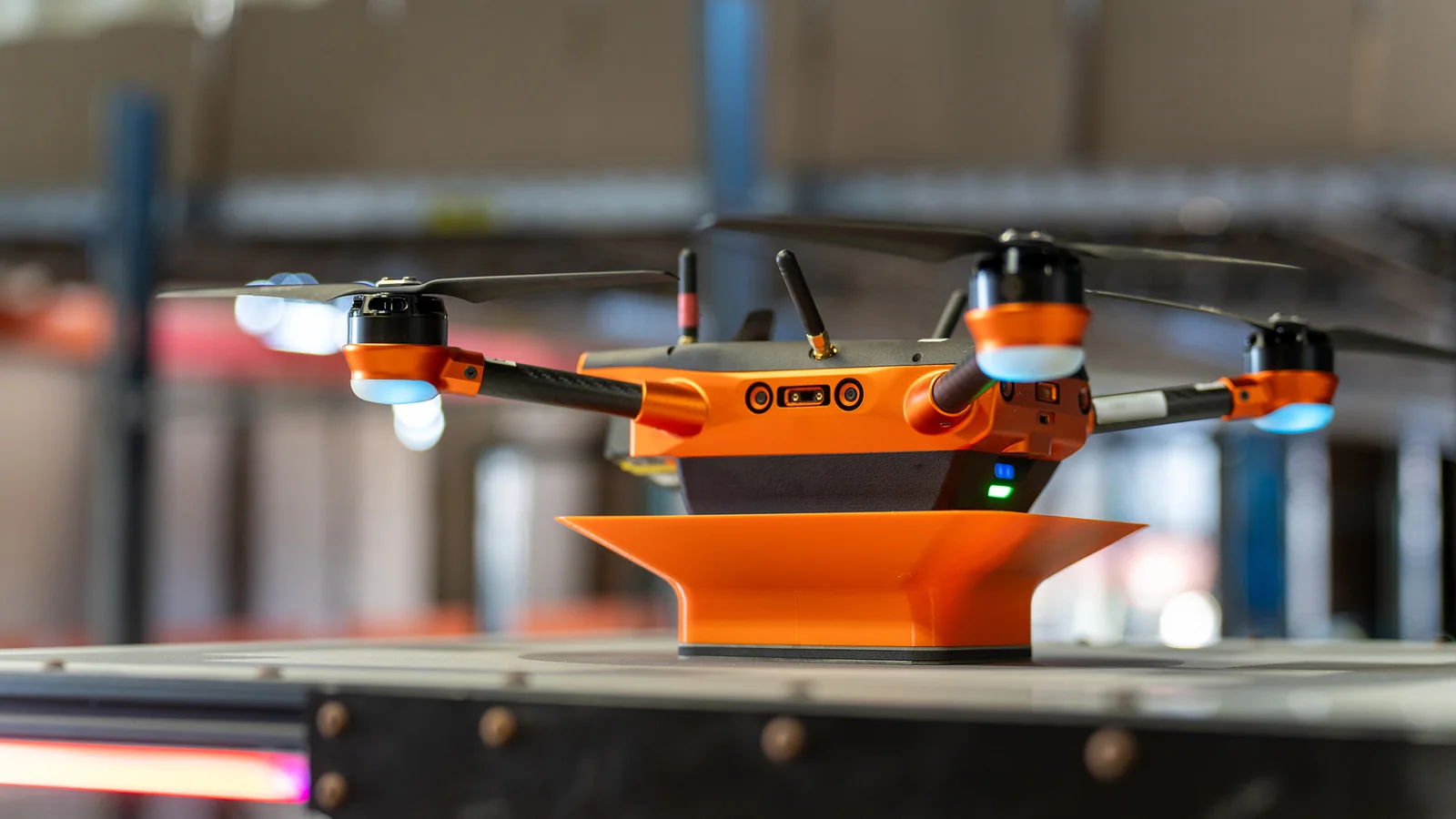
American Made Warehouse Drones: Why We Design and Manufacture the Full Stack in Mountain View, California
Software in a robot is limited by the hardware it runs on. Why every ceiling in the product is set before anyone writes a line of inventory logic.
September 17, 2026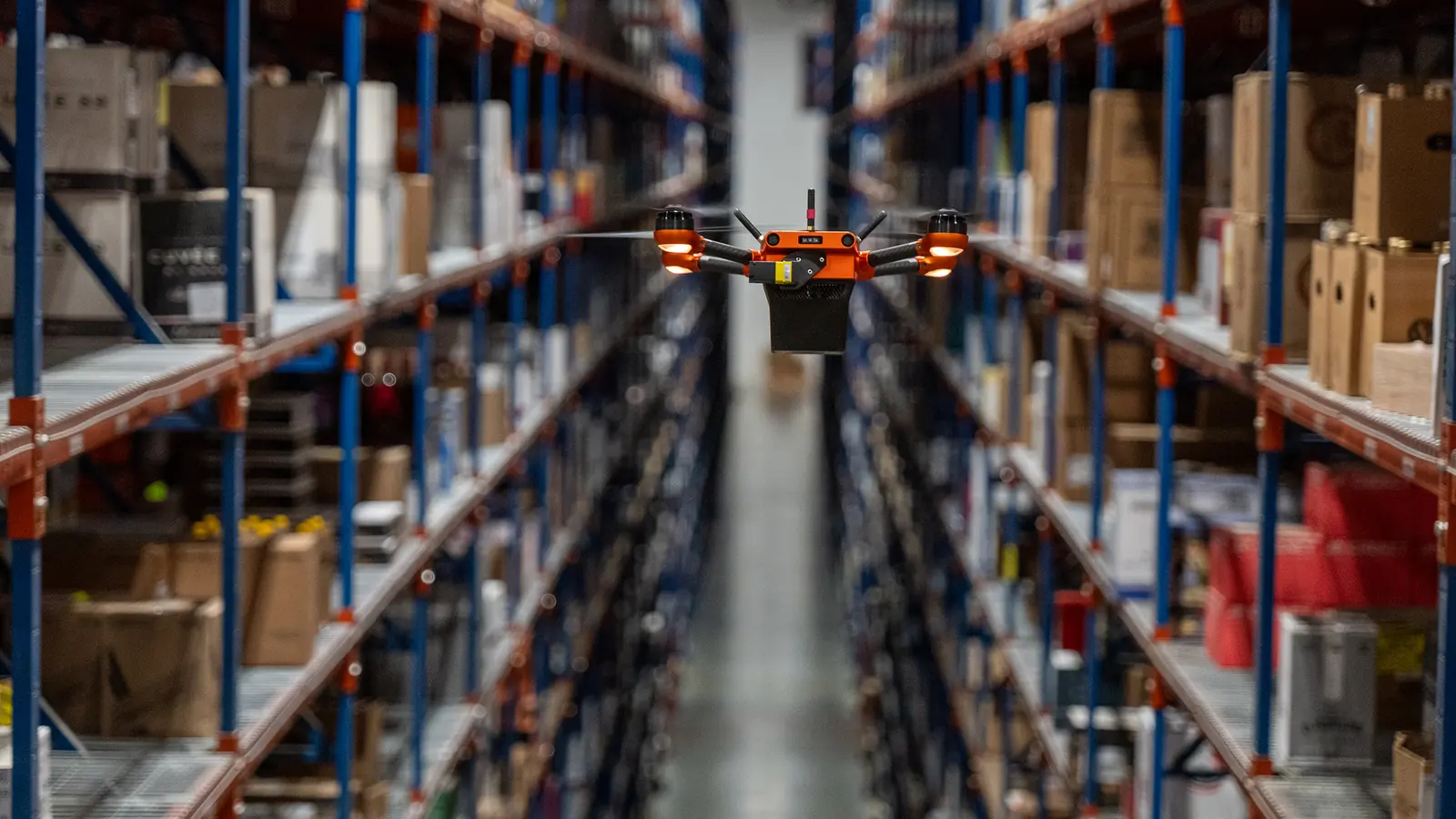
Recall Readiness Doesn’t End at FSMA 204 Compliance
FSMA 204 gives you 24 hours to produce the records. Finding the affected lot inside the building is a separate problem.
September 8, 2026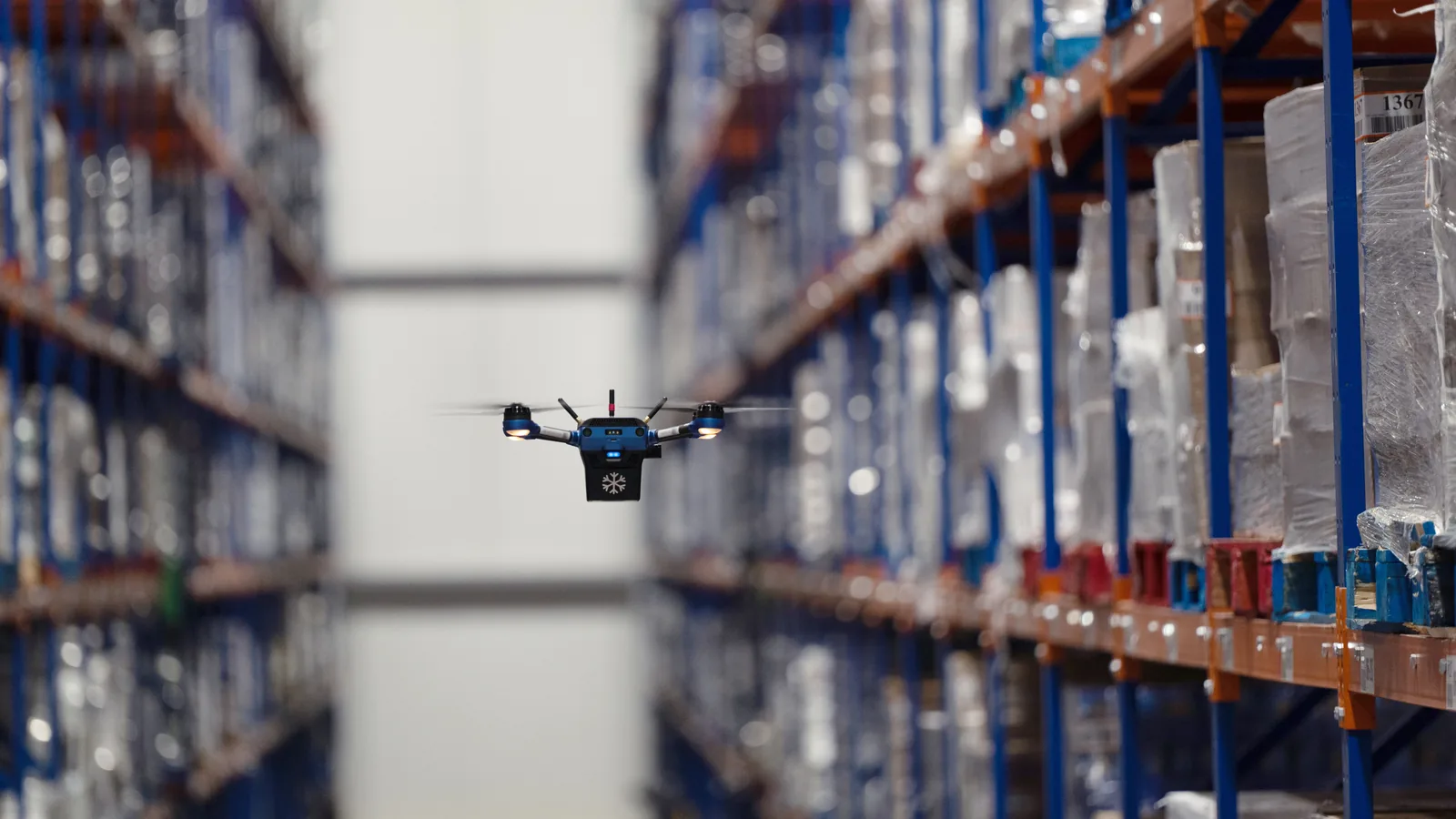
Reclaiming the Freezer: Why the Coldest Job in the Warehouse Shouldn’t Require a Person
Manual cycle counting in a freezer is punishing, error-prone work, in an industry where turnover already runs at 32.6%.
July 13, 2026