
American Made Warehouse Drones: Why We Design and Manufacture the Full Stack in Mountain View, California
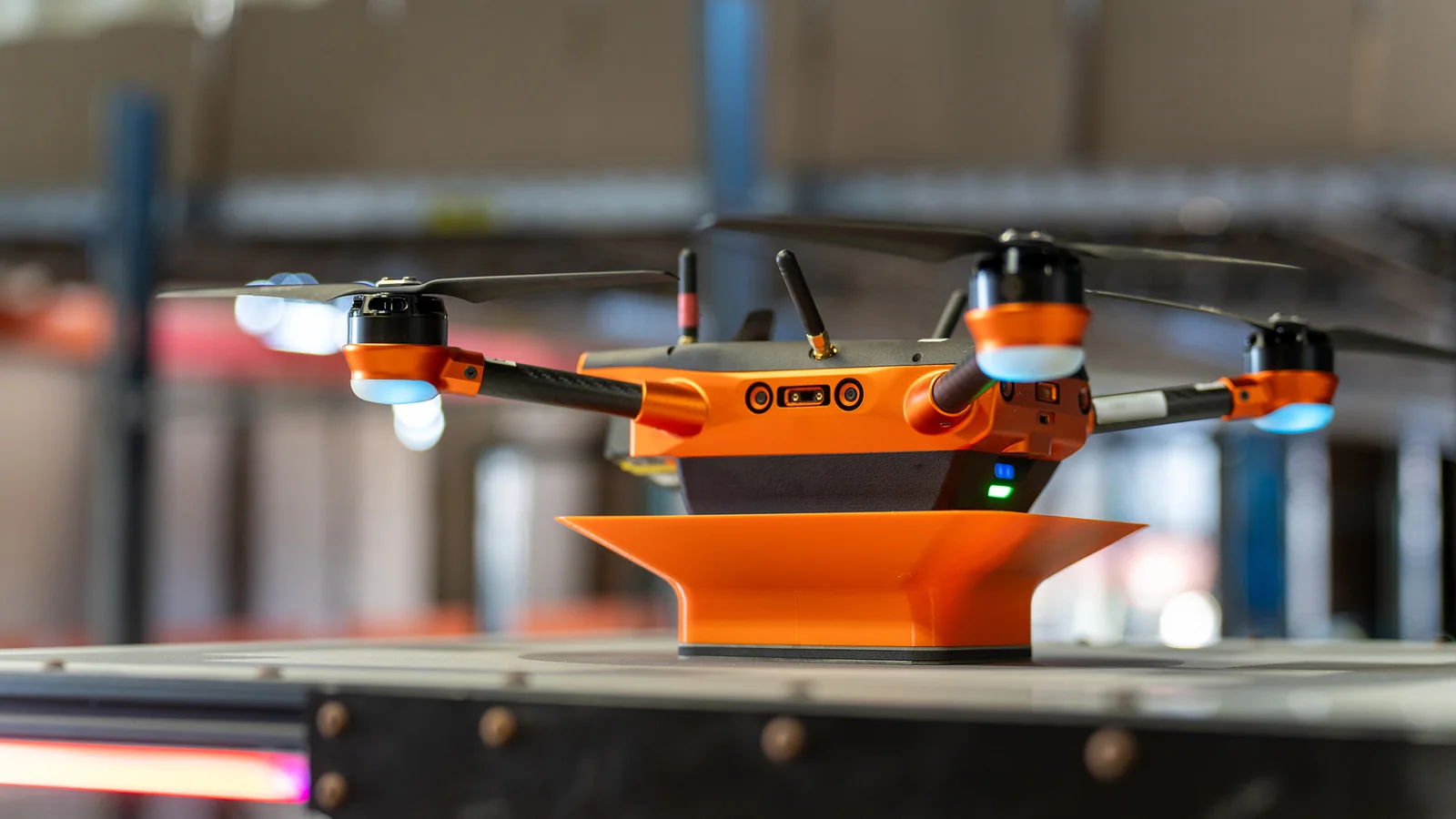
Corvus Robotics builds its own hardware and its own software. We design and manufacture the full stack in America, from the sensor and compute architecture to the AI models running on each device. Every Corvus One® and Corvus Trident™ unit is designed, manufactured and tested at company headquarters in Mountain View, California.
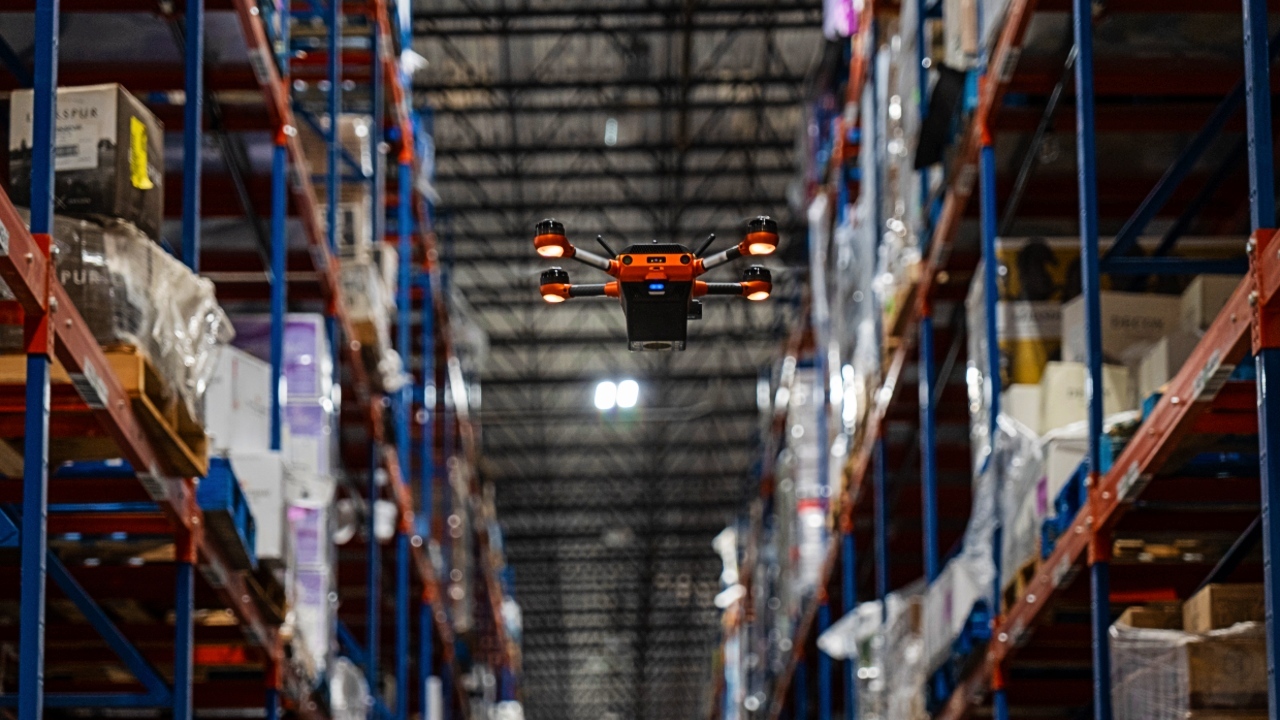
Corvus One flies indoors, inside active warehouses, distribution centers and manufacturing plants, and down to minus 20F in freezers. Corvus Trident rides on the forklifts and reach trucks working those same aisles. We fly without GPS and without localization stickers, beacons, markers or WiFi. Both are vision systems, so what they see and what they make of their environment happen onboard. We design and manufacture both.
Why robotics companies have to build their own hardware
Robotics companies need to build their own hardware. In five years the industry will look back and find it strange that anybody argued otherwise, because software in a robot is ultimately limited by the hardware it runs on. A perception model sees whatever the sensor hands it and nothing past that. Correction speed is capped by the compute on board. Every ceiling in the product is set in hardware.
So the hardware decisions are the product decisions. Aisle width. Reaction time. Whether the system reads a frosted label at minus 20F. How long it flies before it lands. All of that gets settled when somebody picks an airframe, a sensor and a compute module, before anyone writes a line of inventory logic. Which is why the American robotics industry lives or dies on hardware. The software written later runs inside the limits those three choices already set.
The roboticists who started Corvus Robotics reached that conclusion early. As we tested, played with, took apart, and reassembled prototypes, we saw that none of this stuff would hold up in real world environments unless we owned the hardware too. That’s why Corvus One is deployed and working at enterprise scale today.
The risks of software-only robotics
The case for the other approach deserves stating properly, because it’s a real one and the people making it are not fools. The software-only camp made a deliberate early decision to build the vision system and leave the vehicle to somebody else, reasoning that a strong enough stack can make commodity hardware work. That keeps capital expenditure off the customer’s books and manufacturing off their own. It also means they can move to a better airframe whenever a better one appears, with no tooling to write off and no production line to retrain. Put that way, it sounds like a disciplined choice.
Then look at where the capability gains come from. When one software-only vendor announced a step change in 2025, the improvements stated were flight in narrower aisles, dynamic obstacle avoidance, and depth data good enough to infer case counts. The vendor got them by having a drone platform company co-develop a logistics variant, and the replacement was announced as American made, which tells you what else was driving the decision. The fleet it was augmenting was DJI. So a company with no hardware of its own needed a partner to build it a new aircraft, on that partner’s timeline, because the ground had moved under the one it was already flying. Somebody else is writing that roadmap.
Same story in the freezer. Holding position at minus 20F while frost forms on the labels you have to read takes an airframe engineered for it, and that engineering gets paid for either way. It lands in the price if it doesn’t land on the balance sheet.
A company that controls only its software layer inherits decisions it didn’t make. It can ask for changes, and partners do co-develop hardware, so it does get a say in the design. But each request still runs on another company’s budget and build schedule, and what ships is what also suits that company’s other customers. Design, pricing and availability can move without notice. And every device capturing the data the product sells, in the rack or on the forklift, is hardware they didn’t build.
A second source of change arrived, this one from Washington rather than from a supplier. In December 2025, an executive branch interagency body issued a national security determination on foreign-made unmanned aircraft and their critical components, and the FCC added foreign-produced drones and UAS critical components to its Covered List the following day. Action against DJI and Autel was widely expected. The listing went further and reached every foreign-produced airframe, which caught the industry off guard. The effect is narrow and it is real. Covered devices get no new equipment authorizations, which means new models can’t be imported, marketed or sold in the United States under that authorization. Aircraft already authorized keep flying. Exemptions have been extended more than once without ever reaching a DJI or Autel product. DJI and Autel are both challenging the listing, and neither challenge has produced a decision on the merits. Proceedings like these can run for years.
Then the tariffs arrived. In August 2026 the White House imposed tariffs on imported drones and drone components, which includes the aircraft that fly in warehouses. Most producers pay 25%. Producers in a short list of allied countries, Switzerland among them, pay 15% instead, conditional on where their hardware, software and technology originate. These rates were set by proclamation and can be changed the same way, so the exposure matters more than the current number.
We manufacture in Mountain View, so a customer adding ten drones to a network gets ten drones we built. When trade policy moves, our answer doesn’t. There is no replacement airframe to go source and no supplier to requalify.
Corvus One video transcript
Meet Corvus One, your autonomous inventory management system. Fully autonomous, lights-out data capture. Powered by third-generation Corvus intelligence, trained on millions of interactions from the real world. Scan barcodes, find empties, and count cases. Works any shift, day or night. No pilot, reflectors, or stickers for navigation.
What purpose-built hardware makes possible
Designing the aircraft and the software together improves scan speed, data quality and barcode read rates over retrofitting another company’s drone or camera. The flight control loop also runs on compute we specify and closes in under 10 milliseconds. At aisle speed that is the margin between seeing a rack upright and hitting it. The same argument produced Corvus Trident, a camera system we designed to mount on material handling equipment and read pallets while the truck is still moving. No third-party drone roadmap was ever going to hand us that.
Hardware control lets us engineer for the conditions warehouses actually have. Dim lighting, narrow aisles, dust, and traffic that keeps moving while the drone works. Then the freezer, where the air sits at minus 20F and frost builds on the labels the system has to read while the blowers push it around. Batteries too. Cells lose capacity in that cold and stop taking a charge properly, so running a freezer around the clock meant engineering the battery pack and its thermal management for the cold itself. Every one of those conditions is a hardware call, from the optics to the battery pack to how an airframe holds position in moving air.
For us, obviously, owning the stack means we don’t install reference points for the aircraft to navigate by. Some systems run off-the-shelf airframes and need navigation stickers on the racking. Others need battery-powered localization beacons installed around the building, which have to be maintained and moved whenever a layout changes. Both make the building part of the system, and every reference point in it is one more thing that can fail. We build the perception stack and the hardware that runs it, so we designed the requirement out of the product.
Reliability, security, and data integrity
A vendor that doesn’t build its hardware can only pass along what a supplier tells it about how the data gets captured and where it goes afterward. Who owns the data once it lands is a question the supplier’s terms answer. Data handling is a large part of why foreign-made airframes ended up on the Covered List.
With Corvus One, we know what’s on every board and where the data is going. Customers decide whether that data goes to the cloud or gets processed on premise.
Maintenance is where the difference gets expensive. When a drone drifts, or crashes, or starts doing something nobody predicted, a software-only vendor can file the report and wait. The fix arrives on the manufacturer’s schedule, sometimes folded into the next product generation two or three years out. A customer who needs something custom is asking that vendor to go negotiate for it.
We own the hardware, so a fix reaches the device instead of stopping at a support ticket.
Certifications and standards
Corvus Robotics is certified to ISO/IEC 27001, the international standard for information security management, by an independent registrar. The Corvus One drone battery is certified to UL 2054 by TÜV Rheinland, and is tested to UN 38.3, the United Nations standard for safe lithium battery transport. The system is CE marked and RoHS compliant for the European market, which are declarations of conformity issued by the manufacturer. For information security controls, Corvus Robotics also maintains SOC 1 and SOC 2 reports, which are independent third-party attestations.
Every Corvus One and Corvus Trident is designed, manufactured and tested in Mountain View, California. It’s how a drone ends up flying a freezer aisle at minus 20F with the lights off and the building empty. It’s how we localize a forklift or reach truck so that every time a pallet is picked up, we know the exact route taken to its next destination. The next constraint a customer runs into will be ours to solve, on our own schedule.
Frequently Asked Questions
Common questions about where Corvus drones are made and who builds them. Don’t see yours? Talk to our team.
Corvus One drones are designed, manufactured, assembled and tested at Corvus Robotics headquarters in Mountain View, California. Corvus Robotics designs and manufactures the full stack in America, from the sensor and compute architecture to the AI models running on each device. Every unit ships from California.
Corvus Robotics builds its own drones. Corvus One is not a DJI aircraft or a modified version of one. The airframe, the flight stack, the camera system and the onboard AI are developed together by one team rather than fitted around a vehicle that already exists. Any vendor sourcing its airframe from a separate manufacturer, wherever that manufacturer is based, works to that manufacturer’s design decisions, budget and release schedule.
Corvus Robotics designs its own sensor and compute architecture, along with the AI models that run on it. The flight control loop closes in under 10 milliseconds on compute Corvus specifies, and the imaging system reads barcodes through frost, glare and the low-contrast conditions typical of industrial freezers. A vendor running its software on another company’s device inherits those limits rather than setting them.
Corvus Robotics manufactures Corvus Trident at its Mountain View, California headquarters. Trident is a camera system Corvus designed to mount on material handling equipment and read pallets while the forklift or reach truck is still moving, so it covers inventory in motion while Corvus One counts inventory at rest.
Corvus Robotics is headquartered at 355 Pioneer Way in Mountain View, California. The company was founded in 2017 and now runs design, manufacturing and test from that one site.
More News & Content
Southern Glazer's Scales AI Inventory Drones Across 9 Distribution Centers
40+ drones, 5,000 flights, and over 35,000 verified discrepancies identified across nine facilities nationwide.
March 24, 2026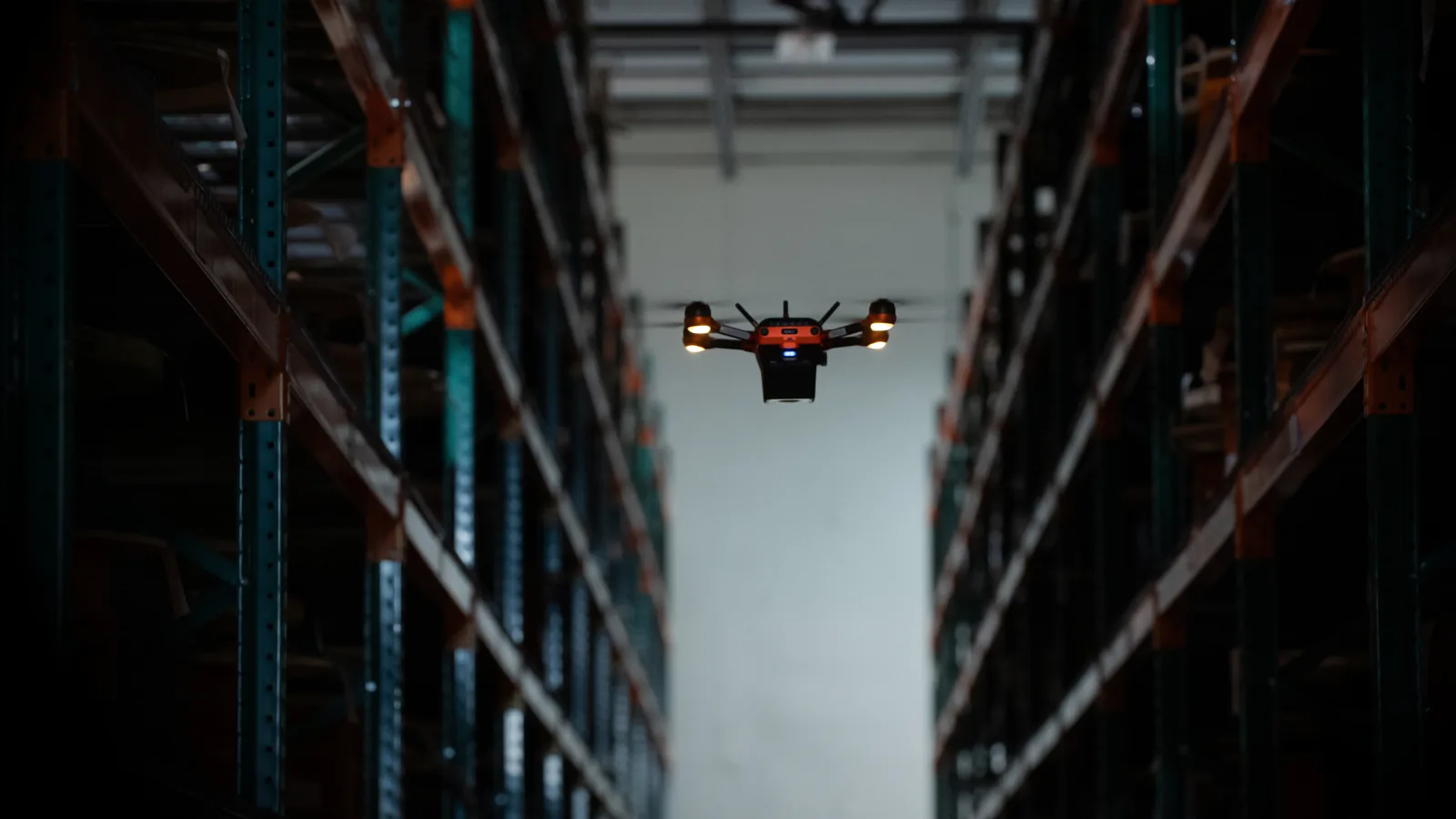
Recall Readiness Doesn’t End at FSMA 204 Compliance
FSMA 204 gives you 24 hours to produce the records. Finding the affected lot inside the building is a separate problem.
September 8, 2026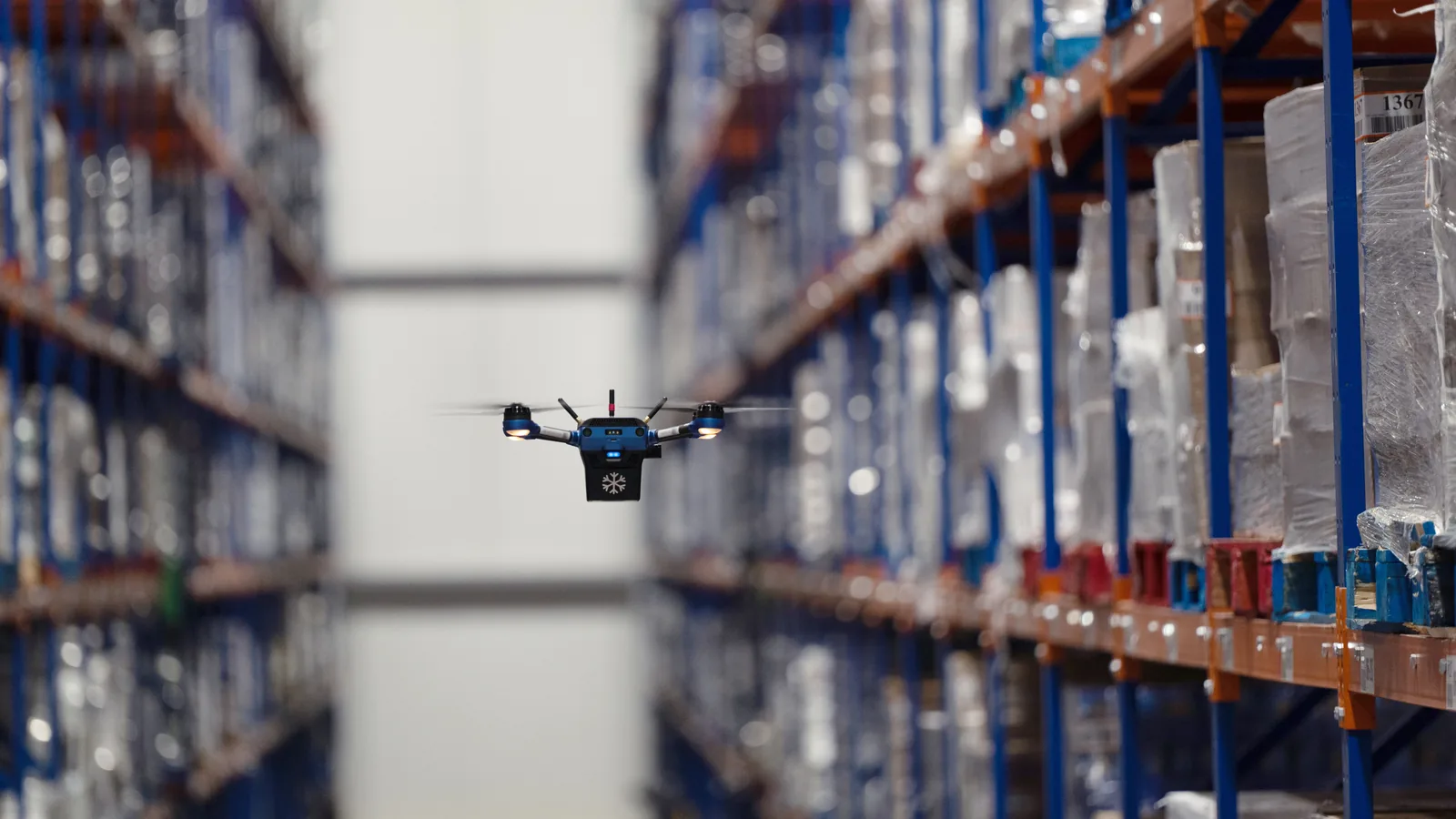
Reclaiming the Freezer: Why the Coldest Job in the Warehouse Shouldn’t Require a Person
Manual cycle counting in a freezer is punishing, error-prone work, in an industry where turnover already runs at 32.6%.
July 13, 2026