
Reclaiming the Freezer: Why the Coldest Job in the Warehouse Shouldn’t Require a Person
Counting inventory by hand is the most punishing job in a cold storage facility, and the easiest one to automate.
If you’ve ever spent time managing or operating a cold storage facility, you know the grueling daily ritual. You put on your base layer, then a thick freezer suit, pull on a hood, struggle into heavy gloves, and take a deep breath at the dock door before stepping into the sub-zero cold. The work must go on, because freezer inventory is mostly perishable, with limited shelf life.
For decades, this was simply accepted as the cost of doing business. The cold chain has to run cold, so human beings have to endure the cold.
We addressed this topic for The Robotics Group of MHI in a recent article, The Coldest Job in the Warehouse Shouldn’t Require a Person, stressing how managing inventory in these sub-zero environments remains one of the most punishing and inefficient manual tasks in modern logistics.
The intersection of extreme cold, high racking, and repetitive tasks creates an ideal use case for specialized automation.
Cold Storage Demand Is Growing Into Aging Buildings
The global demand for cold storage is accelerating at an unprecedented pace, and the average U.S. cold storage facility is now over 40 years old. This presents modern operators with a mix of legacy structural limitations and intense data-tracking pressures. Massive construction is underway, yet building more square footage or upgrading brick-and-mortar facilities solves the storage problem while doing nothing to fix the persistent, compounding data visibility problem inside the freezer walls.
The Brutal Reality of Manual Freezer Counts
Inventory control is the lifeblood of supply chain efficiency, but in a sub-zero environment that data is even harder to get. Manual cycle counting is miserable, error-prone, and downright dangerous work.
Consider what the extreme cold does to the human body over a standard shift. Fine motor skills are the first to degrade as fingers go numb. Yet precise touch and feel are exactly what an operator needs when maneuvering a reach truck to the top of a 40-foot rack, and punching numbers into a hand-held scanner. When you mix heights, sub-zero temperatures, bulky gloves, and tasks requiring high precision, operations invariably suffer.
Because manual cycle counts are physically punishing, shift lengths are strictly capped for safety. Consequently, counts are performed infrequently, which threatens First-In, First-Out (FIFO) compliance and increases the risk of product spoilage.
Cold conditions amplify operational hazards and cause high turnover. According to the Global Cold Chain Alliance, cold storage worker turnover stands at 32.6%. This constant churn forces organizations into perpetual cycles of onboarding, placing inexperienced personnel into their harshest environments.
Counting Without a Person in the Freezer
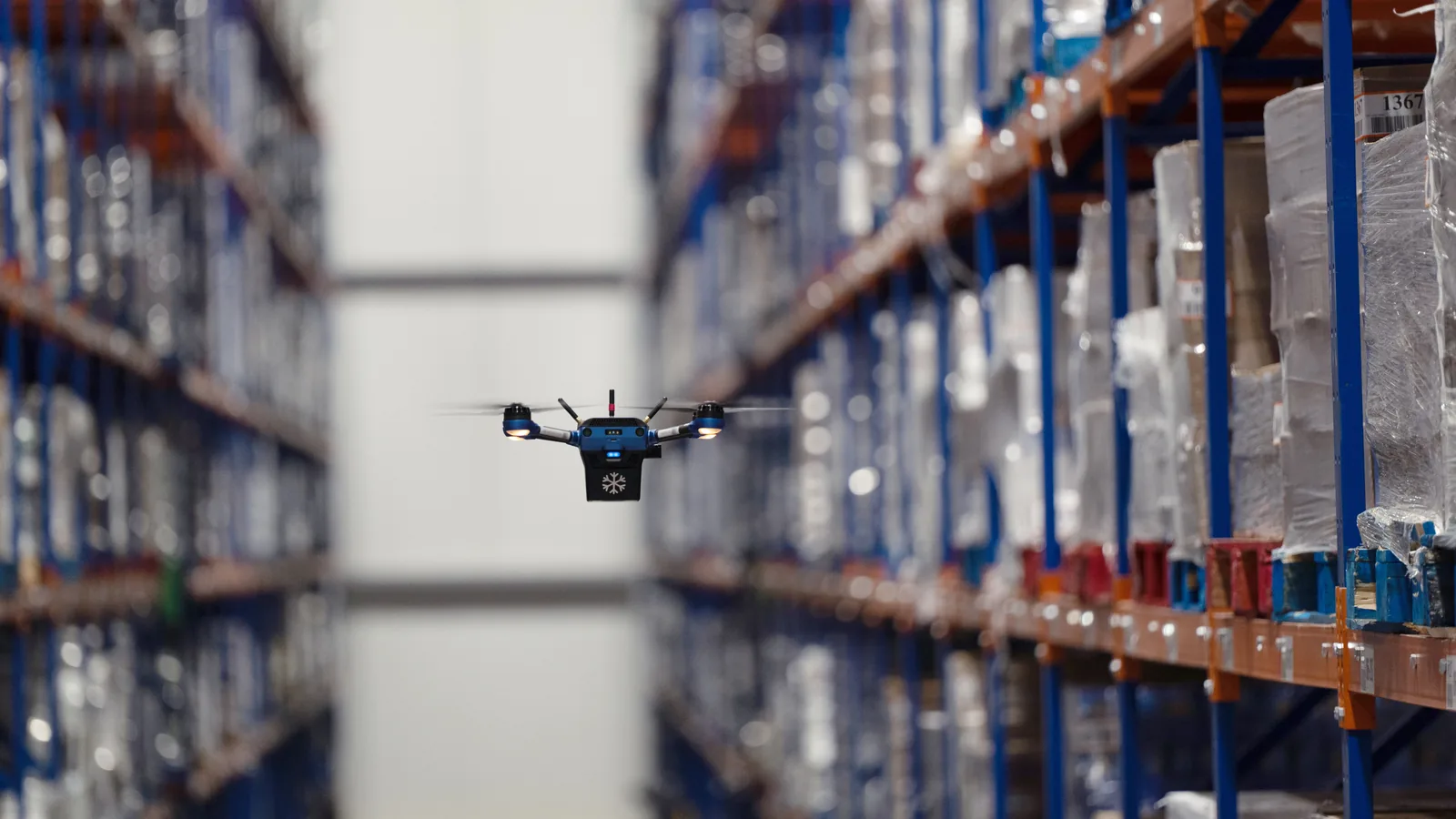
To solve these specific limitations, the Corvus One® for Cold Chain system was engineered from the ground up to count inventory 24/7 during active warehouse shifts without facility downtime. The drone-based solution operates continuously in temperatures down to -20°F (-29°C). The real breakthrough is that it is a fully autonomous solution, with onboard computer vision that navigates without requiring localization markers, beacons, or a dedicated Wi-Fi network. The imaging system reads existing barcodes through frost, glare, and low-contrast conditions typical of industrial freezers, and upgraded flight control AI maintains stability in the wash of high-velocity industrial cooling blowers, and safely avoids people and other moving equipment in the warehouse.
Sub-zero environments create a real operational strain for manual counting. Automating these tasks protects workers and reallocates human labor to higher-value roles.
Read the full article on The Robotics Group of MHI, or talk to us about counting your freezer without sending anyone into it.
More News & Content
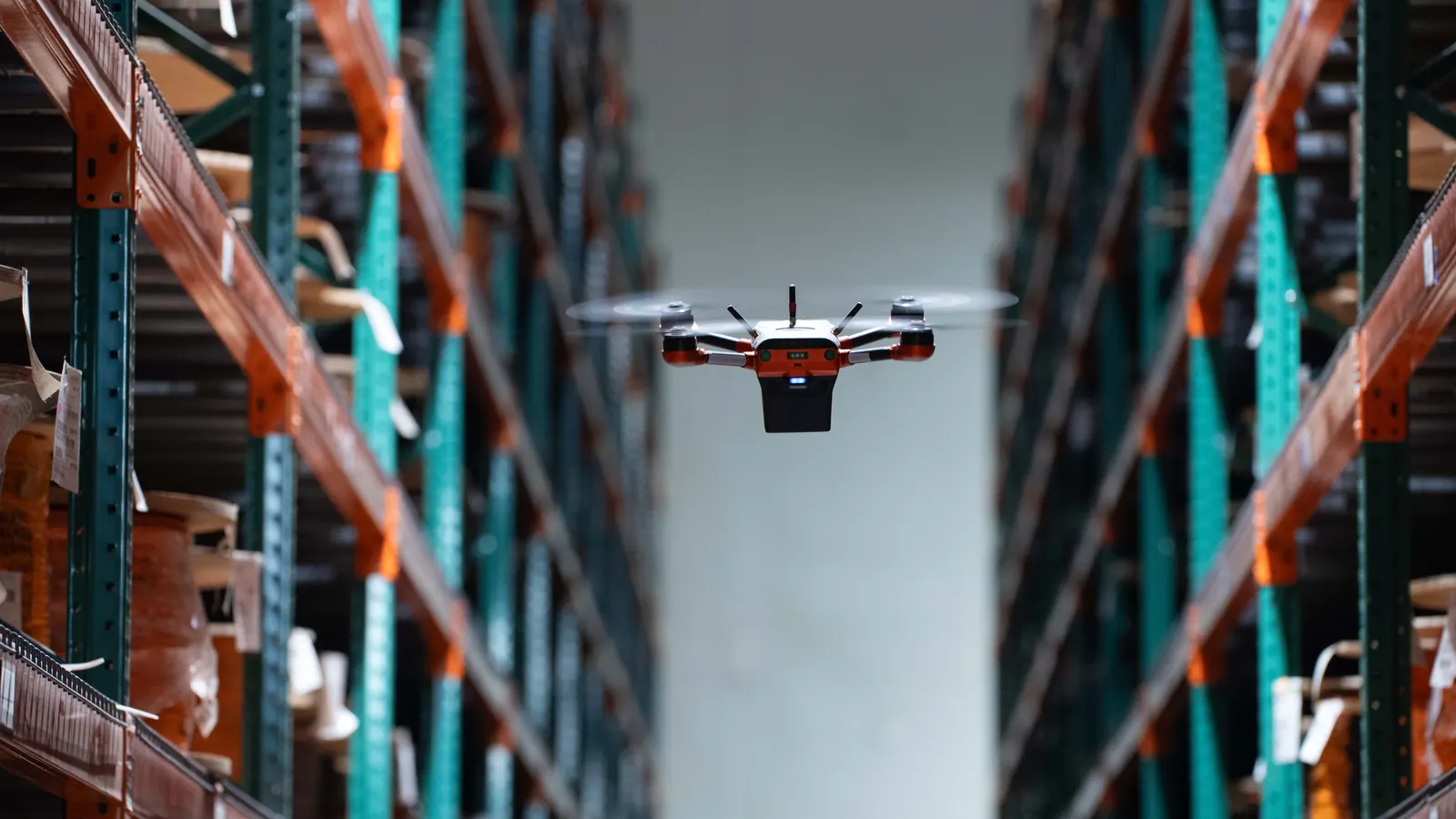
What to Know Before You Buy Warehouse Inventory Drones
If you’re evaluating inventory drones, you’re going to run into claims that haven’t been true for years.
October 7, 2026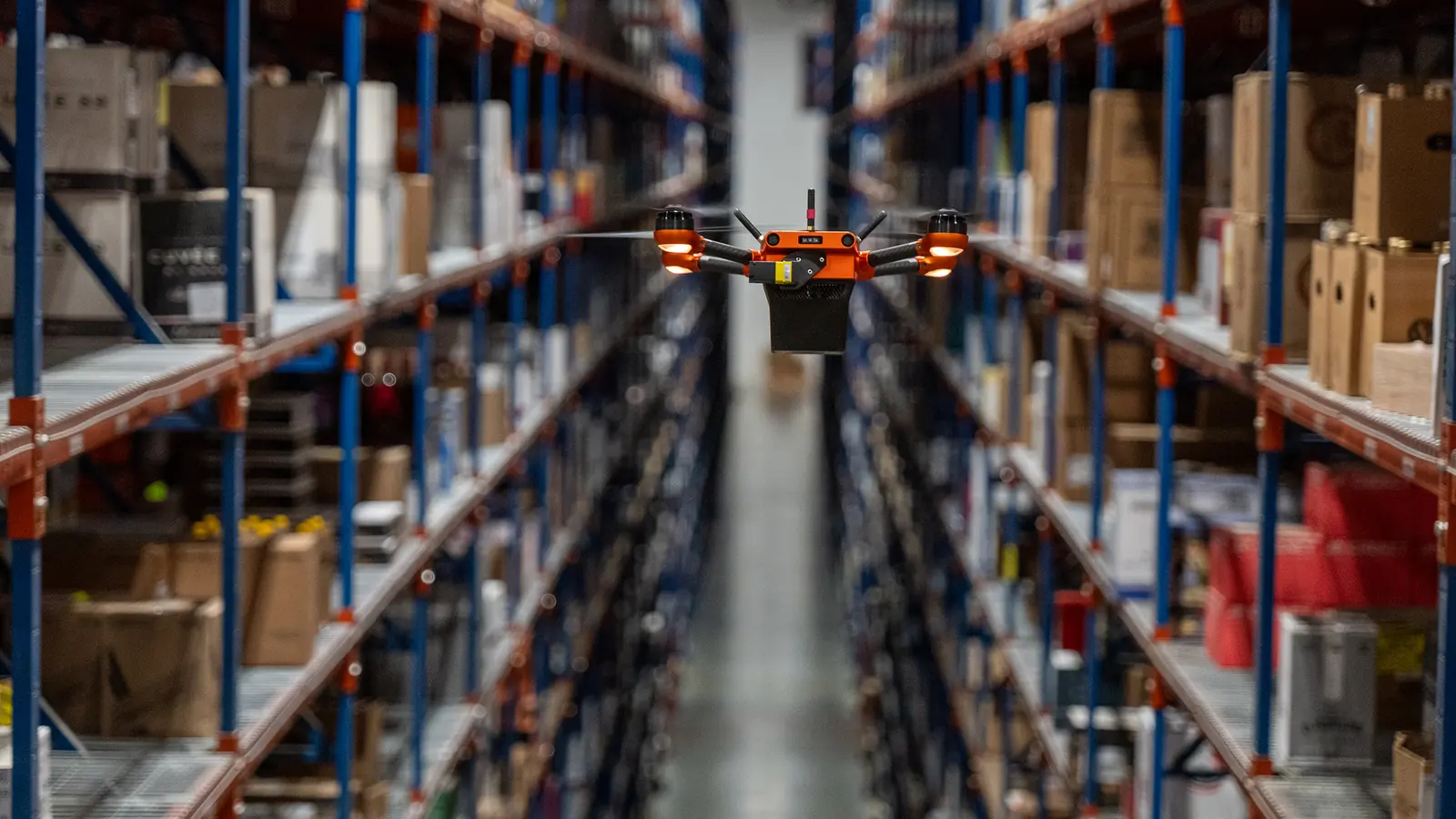
Recall Readiness Doesn’t End at FSMA 204 Compliance
FSMA 204 gives you 24 hours to produce the records. Finding the affected lot inside the building is a separate problem.
September 8, 2026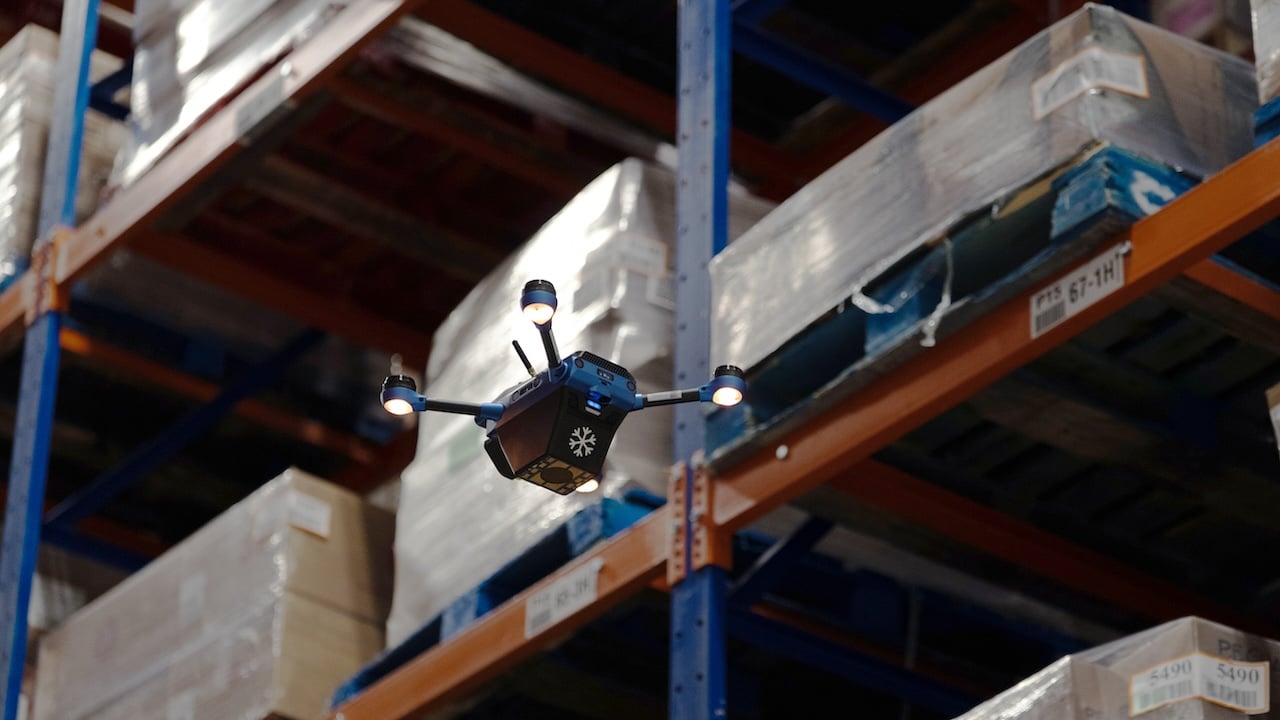
Corvus Robotics Launches Dedicated Cold Chain Drones for Sub-Zero Warehouses
Purpose-built for continuous autonomous cycle counts in freezer environments down to -20°F, including live deployment at Kroger.
February 9, 2026