
Karli Sage of Southern Glazer's on Autonomous Inventory Drones
Karli Sage, Vice President of Supply Chain Management Technology and Engineering at Southern Glazer’s Wine & Spirits, joins host Kevin Lawton to walk through how they picked a drone vendor, piloted it for nine months and scaled it to nine distribution centers.
Southern Glazer’s Wine & Spirits, the largest beverage alcohol distributor in the United States, chose Corvus One® autonomous inventory drones because they fly with no one walking alongside them and send their results straight into its warehouse management system. After a nine-month pilot, Southern Glazer’s scaled Corvus One to nine distribution centers in about 18 months, and those sites now count every reserve location wall to wall in two weeks or less. Karli Sage, Vice President of Supply Chain Management Technology and Engineering, walks host Kevin Lawton through the decision on The New Warehouse Podcast.
Why Wine and Spirits Distribution Is Hard to Automate
Karli Sage says technology proven in other industries is hard to compare apples to apples with wine and spirits distribution. Southern Glazer’s warehouses hold about 13,000 SKUs on average, and every SKU ships in its own box (most companies work with a handful of case templates). Some Southern Glazer’s facilities ship 70,000 to 100,000 cases a night for next-day delivery, and state regulations mean it needs a warehouse in every market it serves. She says some mobile robots and case picking systems can’t produce at those rates without running longer.
Why Southern Glazer’s Chose Corvus One
Southern Glazer’s had two requirements for an inventory drone, and Corvus One met both. The first was full autonomy. Karli says some drone vendors still assign a person to walk with each drone, and Southern Glazer’s wanted to fly during off hours without paying someone overtime to follow it.
“We’re not taking the drone for a walk. We’re asking the drone to cycle count.”
Karli Sage, VP, Supply Chain Management Technology & Engineering, Southern Glazer’s Wine & SpiritsThe second was a warehouse management system integration that worked from day one. Karli says a couple of vendors offered it as a future upgrade, and Corvus told her, “Yes, we can. We can do that, and we can do it now for you.” Corvus One now sends its data straight into Southern Glazer’s WMS, which automatically creates cycle count tasks for locations with high exception rates, based on how many cases are off and the dollar value of those cases. Karli calls that customization the biggest game changer and one of the major reasons Southern Glazer’s went with Corvus.
Results Across Nine Distribution Centers
Southern Glazer’s ran its first Corvus One pilot for about nine months, since it had never deployed drones and wanted to get it right the first time, then scaled to nine distribution centers in about 18 months. Those sites now count every reserve location wall to wall in two weeks or less, where audits had required a wall-to-wall count every 90 days. Anyone on the team can search a SKU number or description and see every location that product has been in over the past two weeks.
“We are no longer shorting products. We are giving them everything that they ordered, because we have better visibility.”
Karli Sage, VP, Supply Chain Management Technology & Engineering, Southern Glazer’s Wine & SpiritsAs of the March 2026 announcement, Southern Glazer’s was running more than 40 Corvus One drones across nine distribution centers and had identified more than 35,000 verified inventory discrepancies. The Southern Glazer’s case study has the full results.
What Happened to the Cycle Counters
Southern Glazer’s kept every cycle counter after deploying Corvus One. Each drone has a cycle counter who owns its aisles, keeping loose stretch wrap cut and working the exceptions, and Karli credits that ownership with cleaner aisles and better drone performance. Cycle counters now also count the pick modules (where product comes off the pallet and onto the conveyor) and work returns, salvage and damages back into sellable inventory.
Karli Sage’s Advice Before Deploying Inventory Drones
Karli Sage’s advice for any operation evaluating inventory drones: clean up your master data before you approach a vendor, raise the housekeeping standard before the first flight, and decide ahead of time what your team will do next. Without that last part, in her words, “you’ll solve a problem, but you won’t really solve the big problem.” When Southern Glazer’s explained the change to its cycle counters, Karli started with why accuracy matters: “Inventory is dollars. It’s money. It’s what you own.”
Listen to the Full Episode
This episode originally appeared on The New Warehouse Podcast, hosted by Kevin Lawton, on June 10, 2026.
Full Transcript
Transcript of the full episode, lightly edited for readability.
Kevin Lawton: Hey, it's Kevin with The New Warehouse Podcast, bringing you a new episode today. On today's episode, we're going to dive into some supply chain technology, specifically within the four walls of the warehouse. I'm going to be joined by Karli Sage. She is the Vice President of Supply Chain Management Technology and Engineering at Southern Glazer's Wine & Spirits. So we're going to talk a little bit about how she approaches technology within the four walls. How is she looking at some of the innovation that's happening in the space? We're also going to concentrate on a specific project that they recently deployed and worked on with Corvus Robotics, which is utilizing drones to do inventory counting. We're going to learn a little bit about that, how they approached it, how they went about the journey of deployment and really what some of the benefits have been since they've deployed. So, very interested in diving into this today with Karli and learning about their operations. Karli, welcome to the show. How are you?
Karli Sage: Hi, I'm very good, thank you. I'm glad to be here.
Kevin Lawton: Yes, happy to get you on and happy to talk about this. We love getting the operator's perspective on some of the things that are happening in the industry. So why don't we kick it off here: for people that are not familiar with Southern Glazer's, tell us a little bit about what it is you all do and a little bit about the operations side of things.
Karli Sage: Absolutely. So, Southern Glazer's, some of you may know, may not know, we are the world's largest wine and spirits wholesaler. We take all of the products that our suppliers allow us to have and we distribute them to stores, retailers, places that consumers go to buy wine and spirits. We are the largest. We fulfill at least 47 markets of the United States, some representation in Latin America and the Caribbean, and then of course North America, Canada. Everything that comes in, it's really more of a just-in-time model that we serve for our customers, which are the retail stores. Everything that comes in must go out. We turn our inventory quite frequently throughout the year, and that's something that we model ourselves on and drive a lot of our success on. So there's a lot of infrastructure within our buildings to make this happen, and we have to have a lot of conveyor and a lot of technology in order to do this.
Kevin Lawton: Yeah, absolutely. I think it's really interesting, and obviously we love our wine and spirits. I know I do. I've got some right behind me here on my shelf, some Hennessy. So it's very interesting to hear a little bit about the operations and also the large market you serve. I don't think I realized that personally, so a lot going on there. Tell us a little bit about the operations perspective of dealing with wine and spirits. I mean, one, it is heavy, and there's some fragility to it as well because a lot of it's in glass bottles, right? But I imagine there are also some regulation things that come into play. So tell us a little bit, from the operations perspective, about some of the differentiators from somebody that's maybe shipping paper towels, for example.
Karli Sage: Oh, that's a big difference. You need paper towels to clean up some of the spills maybe from wine and spirits, but other than that, they are completely different. With wine and spirits, we have so many different SKUs. I believe on average, our warehouses hold about 13,000 SKUs. We have more than that that we sell. We have about 17,000 and counting, the different types of SKUs that we have. So it's very, very complex. But some of the regulations that we have, and you may have caught on to it when I mentioned it the first time, is that we take all of the products from our suppliers and distribute them to our customers, which we call retail stores or convenience stores. We don't actually ship products to our consumers, which are like yourself, myself and others out there that like to drink wine and spirits, right? So that is one of the regulations. We are sitting perfectly in the middle of that three-tier system, where we do not produce our own wine and spirits, although that would be great, to be able to do our own thing. We take everything that our suppliers do and we then distribute it to the retail stores. And that's really because we can't have suppliers distribute all the way throughout the chain.
Kevin Lawton: Yeah, absolutely. I think it's really interesting to hear that, because it is a little differentiator. As you said, you're not shipping directly to the consumer, you're replenishing those retail stores, the liquor stores, grocery stores, etc., where these things are sold. So now tell us a little bit about this as someone that heads up technology specifically for supply chain. We talk a lot about the technology and the innovation that's happening within the warehouse and the supply chain in general on this show. So I'm curious, how do you navigate today's market? Because it feels like there's just an abundance of solution options. There's a ton of technology coming in, a ton of startups that are trying to do all these new things within operations and warehousing. So how do you approach that? How do you navigate this plethora of options out there?
Karli Sage: I will say the shiny object syndrome is a real disease, and it is very easy to get scooped up into it. The supply chain technology market today is very saturated with a lot of different suppliers, and I say suppliers from the technology perspective: different vendors that are actually creating the same, if not very similar, technologies, right? And it actually puts a lot of pressure on folks like myself, teams that I run and other companies in similar boats to know what's out there, understand it and be able to read between the lines. I would say 10, 15 years ago there were a handful of vendors out there, and they really differentiated themselves by what they offered. That is kind of where integrators really started to become the big power, because they could bring different markets together and provide one whole end-to-end solution. Now what we're seeing when we go to these trade shows is 15, 20, 30 different startups, or even integrators, starting to create their own types of technologies in this space. And we have to read between the lines to say what's actually effective, who has actually done something in this industry and in this space. Because if you are distributing paper towels, paper goods, anything that is not within wine and spirits, it's very hard for us to say this is an apples-to-apples solution or an apples-to-apples technology that would be able to solve our problems. So with the way that technology and supply chain is growing, it's very difficult for us on our side to implement what is really effective, and that's one of the biggest changes I've seen over the last few years.
Kevin Lawton: Yeah, absolutely. It's really interesting to hear that perspective, and I love that you said it's not quite apples to apples with other types of product that have been solved for. So when you're looking at some of these solutions, you're not necessarily saying, okay, well, it worked for this product category. That doesn't necessarily mean it's going to work for us. So what is the differentiator or the challenge there? Is it because the product is a little more fragile, because it's predominantly in glass? Or is it from a regulations perspective? What is the difference where you can't say, okay, these are palletized products, we have palletized products, but it doesn't quite align from an apples-to-apples perspective?
Karli Sage: The biggest differences that stand out between our products and others are, yes, the fragile component of it, it being glass. The second is we have so many SKUs, and each one of those SKUs has a very unique box associated with it. So rather than most companies having two or three, maybe five templates of case boxes that their product goes into, every single SKU has its own box. So we're looking at the thousands. We need to be able to make sure that the technology that's out there can accommodate the variables that our industry serves. And then the most important one is we take a lot of pride in servicing our customers. We have spent many decades saying we will get your order to you tomorrow, right? I know everyone was very excited when Amazon came out with the Prime two-day guarantee. It went into a same-day guarantee, right? We've been doing this for a very long time. We make sure that our customers get the wine and spirits that they need, because it's very critical to the parties that we celebrate and the moments that we create, and we are really the provider of that. And something that's shocking is, with a lot of the technology providers out there, it is hard to achieve the rates that we need in order to get everything to our customers next day. Some of our facilities are doing 70,000 to 100,000 cases a night, right? When you look at some of those autonomous technologies, mobile robots, case picking solutions, they're unable to produce at that speed, and so therefore we need to run longer, right? So that's a big challenge for us. If we don't have the ability to run longer and we need something within the same time window that we're solving for now, that's the biggest challenge that we're facing. And it's very difficult to say that you can compare that across all industries.
Kevin Lawton: Yeah, very interesting, and very interesting to hear about the amount of different cases that you talked about. I never thought about that. It's kind of fascinating to hear that that's a big variability within the operations, one that presents challenges for some of these technology solutions to handle. And fascinating, too, to hear about the speed of delivery and doing 100,000 cases at an operation overnight. Tell us a little bit about how many facilities you have throughout North America to be close to the customer and make those deliveries fairly quickly. What does the network footprint look like?
Karli Sage: I would say the markets that we operate in, or the states that we operate in, and that is really because of the regulations. We cannot cross state lines when we distribute alcohol. So that is a huge thing for everyone involved, because it means for us to be able to have a position in that market, we really need to have a warehouse in that market and a division out there. And so we pride ourselves on making sure that we can supply every division that we're in, in order for us to grow.
Kevin Lawton: Oh, wow. So I think you said 47 different markets. That's a ton of operations to look at and a ton of operations to consider when looking at some of these solutions as well. I think that's pretty fascinating to hear. I'm not necessarily envious of the complexity that I imagine comes with that. So now tell us, in the market right now, what is your view of the technology landscape overall? I'm curious, because obviously we see a ton of stuff with automation, a ton of stuff with robotics, and obviously we can't leave out AI, right? That's all over the place now, not only for the warehouse but for supply chain in general. So I'm curious, what is your take on the overall supply chain technology landscape at the current moment, here in 2026?
Karli Sage: The technology landscape, at least for Southern within our warehousing area: we are actually one of the most advanced, I would say, in the wine and spirits industry. If you were to compare us to manufacturing, however, that's not the same, right? Because we have so much variability in the products that we're delivering, whereas if you build a car, it's the same model every single time, right? So we actually tend to lean towards fixed technology and fixed automation, such as conveyor systems, sorting systems, different types of merges and accumulations. What we're finding now, though, is we can take that and combine it with some of these collaborative robots and some of these other smaller automated technology services that allow us to take the really high speeds that a conveyor can bring us and pair them with something that will reduce the amount of strain on the human body. So that's where we're really focusing a lot of our technology now, to make sure that the enjoyment of these warehouse environments is actually for our people. We want everybody to come to work every day and say they enjoy working in the environment that they do. And in order for us to do that, it's to reduce a lot of the safety concerns by using some of these new technologies that are out there.
Kevin Lawton: Yeah, I think that's a really great approach, and that makes a ton of sense, right? I've lifted a case of wine and a case of spirits before, and they're not light. They're heavy. So I imagine people having to do that work every single day, whether it's building pallets, unloading trucks or whatever the case may be. It's a great approach to think about how we can leverage some of these technologies and automation to reduce some of that heavy lifting, and obviously, from the safety perspective, probably reduce some of those strains that can creep up over time with that repetitive lifting. So, really interesting to hear that. Now we're going to talk about a specific project that you've worked on recently with Corvus Robotics. Tell us a little bit about what the problem or the challenge was that you were facing within the operations that led you to start to look at solutions like Corvus Robotics. What was the problem set that you were dealing with?
Karli Sage: Yeah. So, our warehouses are quite large and we have a ton of SKUs. The biggest problem that we had is we were spending a lot of time cycle counting locations, but not really making up any ground by finding missing product, missing pallets, or just getting that wall-to-wall that was required every 90 days for auditing purposes, right? It was very important for the integrity of our business and the support that we provide our suppliers to make sure that we have all of the product that we say we have. So we found an opportunity to not only reduce some of the safety concerns, right? Because when you are cycle counting very high locations, you actually have to be harnessed in, and you need to reach over and move boxes. And if you can imagine reaching above your head or leaning over and picking up boxes that are 50-plus pounds, doing that at a very high level is risky. So we found an opportunity for us to streamline that process, right? Allow a drone to go out there, take pictures and videos of our inventory and stream it back to a centralized location on the ground for our cycle counters and inventory clerks to then validate. And by doing this, we've been able to speed up the process, because what takes someone a few minutes to go and do, we can get done in a couple of seconds. Because of this, we've been able to solve the problem of finding missing product quicker and having higher integrity of our product throughout our warehouse, which not only supports our suppliers' belief in us to be the number one wholesaler and provider of wine and spirits in the nation, but also our customers. We are no longer shorting products. We are giving them everything that they ordered, because we have better visibility.
Kevin Lawton: Yeah, absolutely. As a former inventory control manager, I definitely know that pain specifically. I had multiple cycle counters working for me as well and had them high up in the racks, as you just said, trying to count. When they get up to the top level and there's a pallet somebody put away that's not a complete pallet, and of course they don't position it in the right way to get full visibility, it does get a little precarious up there, right? Trying to tweak their head around and see, are there really this many cases missing, etc., and figure out those counts. So I think it's a great use case, to be able to, like you said, get those counts faster and attack that. And I love the approach of automated inventory counting, because we spend so much time cycle counting locations that are right versus spending time managing the exceptions and figuring out why we actually have issues in the first place, where we could devote more time to those exceptions themselves. So tell us a little bit, because there are a couple of different options on the market for addressing this kind of thing: how did you assess the different solutions in the market and ultimately end up choosing Corvus Robotics? What was the differentiator that landed you with Corvus?
Karli Sage: Of course. So, there are a ton of drone companies out there, and I don't want to say one is better than the other. We really enjoy Corvus, but it all comes down to what you need that provider to do for you. We needed something that was going to be completely autonomous. And when I say that, I mean some of the drone companies still require a person to be assigned to that drone, so that when it's flying, there is somebody walking with it. Somebody is managing the drone, right? In our case, we said, how can we get to a position, and who's out there that would allow us to fly these drones without somebody tailing it, right? We're not taking the drone for a walk. We're asking the drone to cycle count, right? There are a couple of different approaches there. And we wanted to make sure that we could fly it during off hours. If you had to bring someone in for overtime or during off shifts, then that cost goes up, right? And the whole point was how can we make sure that we're doing this effectively, efficiently, and what's best for the company. The second thing we were looking for in this case was full integration capabilities between what the drone sees and captures and our warehouse management systems. So there were a couple of companies out there that said, yes, in the future we can definitely put this together for you. We can offer these integrations as an upgrade. We can do X, Y and Z when you want it, right? I said, well, I want it now. Oh, okay. Well, we're not quite ready. Okay. So that's different. You can do it for me, you just can't do it now. Okay, not a problem. We'll come back if for some reason we can't find another company that can do it now. And the one thing that Corvus said is, "Yes, we can. We can do that, and we can do it now for you." And I said, "Great. Let's give it a shot," right? So, if we can have autonomous drones flying around in the dark when no one's around, and they can send data back into our warehouse management system, it automatically creates cycle count tasks for us for things that have a high exception rate, based on the number of cases that are incorrect and also the monetary value of those cases. So we've been able to completely customize how we use Corvus, and that has been the biggest game changer and one of the major reasons why we went with them.
Kevin Lawton: Yeah, I think that's really interesting, to get almost a peek behind the curtain a little bit on the decision-making there and the assessment. It's really interesting to hear, too, because, as you mentioned earlier in the conversation, there's some unique variability that happens within your operations. So to be able to define that and, as you said, customize to your needs and tailor that, I think, is a really good testament to why you ultimately decided on Corvus itself. And obviously it's interesting to hear about the autonomous flights that can happen off hours and even in the dark, which I imagine is an additional cost savings on the light and electric bill as well. So now tell us a little bit about the deployment. You said you have a lot of operations, one in almost every market, every state out there. So tell us a little bit about what the deployment has been like. What has the rollout been like? Is this in one facility, multiple facilities? How deep are you going on this?
Karli Sage: Yes. So, we have it in about nine facilities, and we did that over the course of 18 months. Our pilot facility took the longest, because what you don't know, you don't know, and you can't solve for. So we took the most time there, and then we decided to expand and to roll it out. And all of the sites that we have it in now, in all those markets, they are loving it, because they can get full wall-to-walls in two weeks or less, which is incredible, right? So, the amount of visibility. I will say, though, getting to that point did take some time, and that is again because we are new in this space. We've never done drones before, but we wanted to make sure that we did it right the first time. So the first pilot took about nine months for us to really see the results that were driving the decision to expand. But now that we are seeing those results, we've gone into nine markets, and we plan on going into, I think, another 10 that are planned for the next 12 months.
Kevin Lawton: Okay, cool. Interesting to hear that, too, and I love that you're like, well, the first one, we want to get it right, so let's take our time and get it done. I think that's a really smart approach, especially when you have a large network like you have, and I'm sure you're hoping this will be a solution across the board. So I'm curious. We talk about autonomous things and robotics and all these things going on, but tell us a little bit about the human element of it. What was the change from the traditional cycle counter approach? How did that shift some of the processes happening within the operations, and what did you do with the cycle counters as well? Are they just focusing on exceptions now? What did that evolution of the human element of the process look like?
Karli Sage: So we still have all of the cycle counters that are working with all of the Southern Glazer's sites and facilities out there. And one of the interesting things that we did: throughout our warehouses we have many aisles of racking, and one drone can service many aisles at one time. The drones are a little bit particular about a lot of the stringers that are on the pallets, right? With the amount of air that is going into those drones, it can actually rip off some of those stringers, some of that stretch wrap, and if it does that, it ruins the blades, right? So we said, hey, why don't we assign a cycle counter to a drone? We make sure that they take ownership over that number of aisles. And by doing that, there's a lot of pride and ownership in, well, these are my aisles. I keep them clean. I keep the stringers cut. I run the exceptions in here. And I have a little bit of tie back to the company. We've seen a huge amount of improvement in the warehouse cleanliness and also the effectiveness of the drones. Along with that, we also use our cycle counters now to cycle count our pick mods. Our pick mods are where the product goes from those pallets directly to our conveyor system. So, as you can imagine, reserve counting is great, but cycle counting that close to the action of what's going to be serviced to our customers is another huge benefit, because sometimes we put things in the wrong place. We're all human, okay? So that happens. Or maybe someone shouts over to us, hey, so-and-so, don't forget this later, and you grab from the wrong pallet, right? It happens. So for us to be able to cycle count up there, it really narrows in the amount of risk that we have to give the wrong product to our customers. And then of course returns or salvage or damage, things like that. We've applied those cycle counters to those functions as well, to get that inventory back into our warehouses for resale. It's full circle. We've kind of allowed everybody to go towards those higher-value activities, which brings more benefit to the employees as well as the company.
Kevin Lawton: Yeah, I think that's fantastic to hear, how you've done that. And I love that they're tied to a set of aisles, like, I own these aisles. I think it's probably taking 5S to the tenth degree. I'm sure those aisles are looking fantastic, with no plastic wrap hanging or anything like that. Would love to see that sometime. And I love that you took them and said, okay, let's put more concentration and more focus on the pick mods, because that makes total sense, right? That is a high-touch environment. With that touch level and frequency of movement, obviously that's where there's more susceptibility or risk that there could be a potential inventory discrepancy. And then taking those cycle counters and also putting them towards returns and making sure that product can get back into sale, right? Typically your cycle counters are going to be the most detailed and focused people, so returns needs that kind of level of attention as well. So, really interesting to hear how you've gone about that, because I think there's a lot of question for people of, okay, we bring in some autonomous solutions, so how do we navigate the people that were doing that job before? What do they become, or how do we reposition them? I think this is a fantastic example, so I'm happy you shared that with us. So now tell us a little bit, because you've deployed now, like you said, a decent amount of locations and plan to do more, right? Obviously you like the solution, it sounds like. So tell us a little bit about when you deployed, whether it was after that first pilot or a couple of other locations after that. What were some of the improvements? What were some of the results that you saw once you were deployed with this?
Karli Sage: Yes. So, the biggest improvement that we have seen is the wall-to-wall visibility. Like I said before, we can count almost every warehouse within two weeks. That's every single reserve location. The other benefits are the amount of hours that we've freed up for our cycle counters to be able to go and do these higher-value tasks, again, in those high-touch areas. That's the last stop before our customer, really, outside of loading the truck. We want to make sure that that has all eyes on it and we do the best we can to service our customers. The other benefit we've seen is we've actually found about, I think, 30,000 or so opportunities across the divisions that we've installed these Corvus drones in, where we may have been a case short or we may have found missing pallets. That's actually something we do a lot of in our locations. We can actually search for a product by the SKU number, by description, and it will tell you every single location that pallet has been in, or that SKU has been in, over the last two weeks. And that's incredible. So we are able to find so much more product so much quicker, and because of that, that's probably the biggest savings that we've seen. Now, we saw savings in terms of our spend on cycle counting in our first pilot location, but with the remaining nine locations that we deployed, that's when we really saw things come to life. And it's really allowed us to take it to the next step, where we said, okay, these nine locations, it may have been more of a pilot versus a proof of concept in our first site. Now we know that it's completely scalable, and it's absolutely the direction we want to go.
Kevin Lawton: Yeah, I think that's such a fantastic result. I mean, 30,000 instances, that's great, right? Because I think about my days of going around the warehouse trying to find missing product. It can take forever, right? I always would tell people it takes just a few seconds to put something in the wrong spot, but it could take weeks to actually find it and figure out what happened to that product. So the ability to get that wall-to-wall every two weeks, like you said, and have that further visibility, I think that only trickles down to a better customer experience as well, right? Because when you have a missing case or a missing pallet or a misplaced pallet, inevitably that's going to impact the customer experience at some point if you can't find it quickly. So, really interesting to hear your experience there and the approach to it, and how you've navigated the human element, too. I think that was really fascinating, so I really appreciate you sharing that experience with us, the experience so far, as it sounds like you're going to be rolling out more in the future. Now tell us, from your perspective, for people that are looking at this type of technology, because, as you mentioned, you'd never dealt with drones before, and most people haven't, right? There are still a lot of operations out there doing traditional cycle counting, as we talked about. What advice would you give people as they're maybe considering these solutions or learning about the potential that these solutions could have for them?
Karli Sage: So, if you're considering this solution, I would say make sure your master data is up to snuff. Any data that you put into these drones, it's going off of that to do the validations. So if you don't have good master data, clean that up before you even approach one of these companies. We spend a lot of time doing that, and it becomes exhaustive when you have multiple people in the mix, when you could do it ahead of time. And then, of course, going back to the cleanliness of the warehouse. These drones have about four blades on them. They can suck up anything, right? So if you have paper flying around, if you have LPNs, if you have tails on these pallets, make sure you are prepared to clean that up and you set that expectation with your teams, to make sure that the warehouse lives at a different level, a different standard. Getting all of that done ahead of time will make it a lot easier to do any type of deployment. And then also be ready for the change. You have to have a game plan. What is going to happen to these team members? Where are we going to put them? How are we going to reuse them? What is the goal out of this, right? Yes, we're solving for a problem, but what is the main goal? Is it to provide better visibility and better accuracy at your pick mods? Is it to provide better customer service? Is it to provide what, right? Cleaning up cycle counting is one thing, but our biggest target was how do we use the team that we have now to do better everywhere else. And that is one of the things: if you don't have that in mind, you'll solve a problem, but you won't really solve the big problem.
Kevin Lawton: Yeah, I love that. I think that's a really good point that you made, because I actually just had a conversation at a conference with somebody about this. They're piloting an AMR, pallet jack style, and like you said, going into it, your data has to be clean, but your warehouse also has to be clean as well. If there are obstructions and things like that, it's going to cause issues for the robots or the autonomous devices themselves, in this case drones. And she shared that they're piloting this pallet jack, and it tries to engage with the pallet and there's a little piece of plastic wrap hanging. Well, the robot doesn't realize that the forks can just go straight through that plastic. It just thinks it's an obstruction, right? So I think it's a great real-time use case. You're not just bringing in these solutions and they're going to fix everything, right? You have to level up and optimize your operations to get the full benefit of the solution at the end of the day. So I love that you shared that, and I love that you talked about the plan for the people and what we are trying to accomplish overall, the why of the approach and the goal here. I'm curious, and I imagine you deal with this a lot as someone who's focused on technology, about the change management aspect. How do you communicate the change and the why to the people on the floor, in this case the cycle counters? Going into this project, it wasn't, oh, tomorrow we're going to have drones in the warehouse, right? I'm sure there was more communication ahead of that. So tell us a little bit about how you communicated that, and how you also made them feel like, all right, there's still going to be a place for me.
Karli Sage: Yes. I wish it was as easy to say, hey, tomorrow we're going to have drones, and that's it, and everyone just loves it. It doesn't work that way. So for us, we really focused on what we need to communicate about some of the problems in our warehouses, right? It's not that cycle counting is slow. That's not the problem, right? The problem that we have is we need to know where all of our inventory is at all times, and we need to be able to account for the inventory, because inventory is dollars. It's money. It's what you own, right? If you can't account for it, then where is it, what is it doing, and how do you best manage that? So it's all about how we take care of our company and how we take care of our site, because each of our divisions runs on its own P&L. So there's a lot of pride there around making sure that that warehouse is fully accounted for. Talking to the team members about that, saying, hey, we need to make sure that our numbers meet our numbers. We need to make sure that we can account for all of our inventory. We need to make sure we can service our customers. One of the opportunities that we've identified as a way to make this happen is an automated drone that will, A, make it safer for you; B, reduce a lot of the strain that you have from going up into those high-bay areas to cycle count; and C, make it easier for you to do your job, right? And then it also allows us, because everyone out there has dreams and goals and hopes to do something more and something bigger every day, right? This allows us to take those individuals and put them into that stretch project that proves to them we see you, and we see what you're capable of and what you can do, and now, do you see it in yourself? So a lot of those types of communications went out there. A, it's about the company and about having that pride for your division. B, it's about you. Show us what you can do. We believe in you, and that's why you're here today and that's why you're going to be here tomorrow. So let's make this work for everyone.
Kevin Lawton: Wow. I couldn't have put it better myself. If anybody's listening, that's the blueprint to communicate to employees right there, on any change. I think that's fantastic, and I love that the approach and the culture are there to support that and to have that type of communication. And obviously, in the conversation today as well, you demonstrated how thoughtfully you thought about those employees. How are we going to leverage them? How do we utilize them? What does their job evolve into? I think that's such a key aspect as we see this huge technology shift within operations, and how we navigate that autonomous and human balance over the course of this evolution. So it's really been a pleasure to talk to you today, Karli, and learn about not only the Corvus deployment itself but your overall approach to the technology that's happening within the four walls, and also the human element there, too. Really fantastic to hear how you've approached that from your perspective in the organization as a whole. So, really appreciate you joining us and sharing your insights and your experiences. If people are interested in maybe learning more from you or learning more about Southern Glazer's, what's the best way to do that?
Karli Sage: That's a good question. I usually just say, hey, reach out to me. Happy to answer any questions. But we have a whole communications team that's able to put any information out there that you would like to see. If not, we are very prominent on the web, on LinkedIn and all of those other areas. So, happy to answer any questions. I do do a little circuit of the trade shows, and sometimes people recognize me. I had someone stop me last year and they said, oh my gosh, I saw you at the Gartner conference and all this kind of stuff. So even if I'm not speaking or I'm not out there, it doesn't mean you can't say hi, right? So stop me anytime, and I'd be happy to talk with you about whatever you'd like to know on drones or technology.
Kevin Lawton: All right, fantastic. We'll definitely put the website for Southern Glazer's as well as the LinkedIn in the show notes here and at thenewwarehouse.com. So Karli, it's been an absolute pleasure to talk to you today. Thank you once again for joining us on the show.
Karli Sage: Thank you very much.
More News & Content
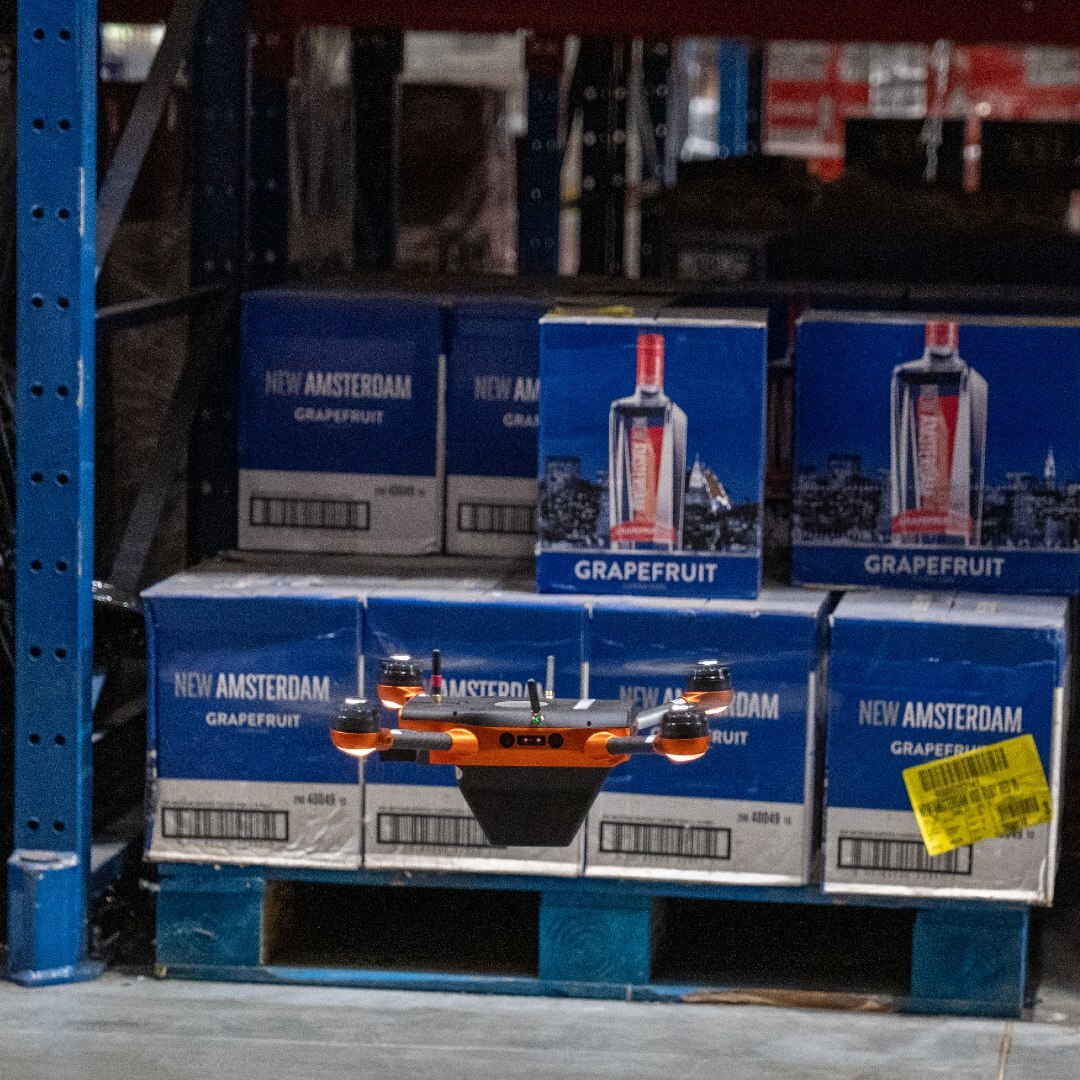
Southern Glazer's Wine & Spirits Scales Corvus One Across 9 Distribution Centers
More than 40 Corvus One drones across nine distribution centers, biweekly inventory turns and a 100 basis point gain in cases per hour.
March 24, 2026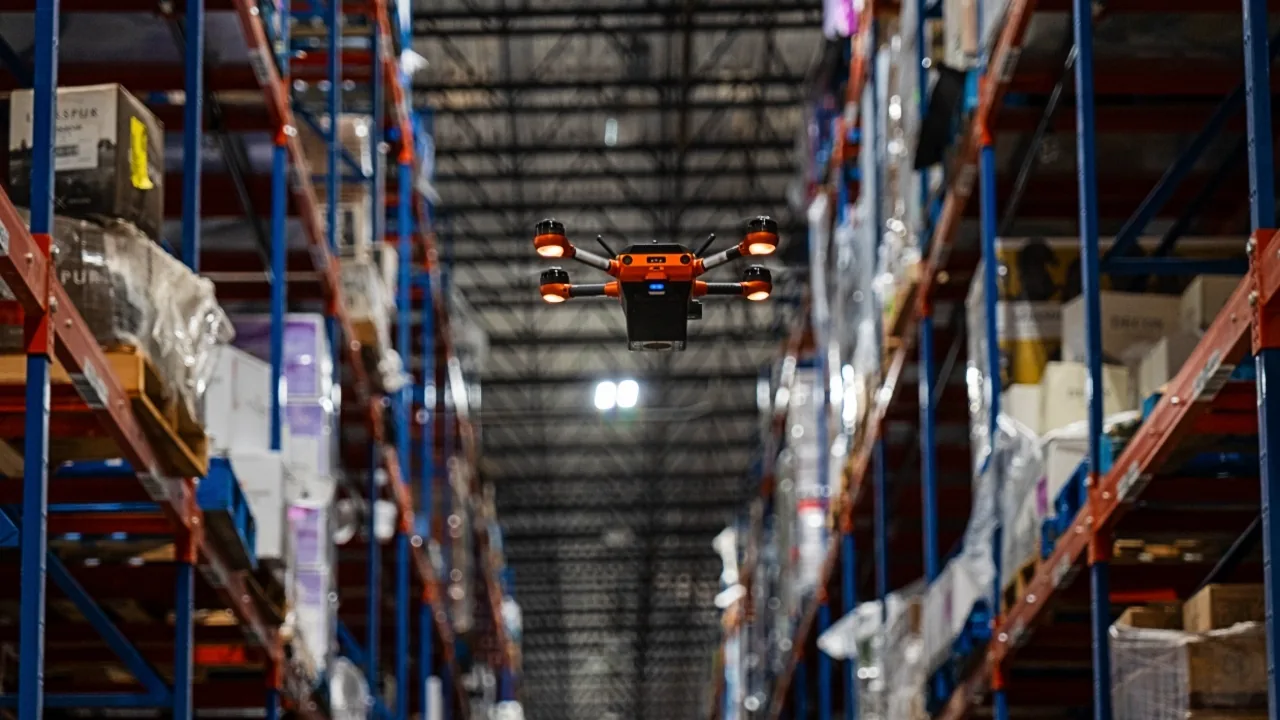
Southern Glazer's Scales AI Inventory Drones Across 9 Distribution Centers
40+ drones, 5,000 flights, and over 35,000 verified discrepancies identified across nine facilities nationwide.
March 24, 2026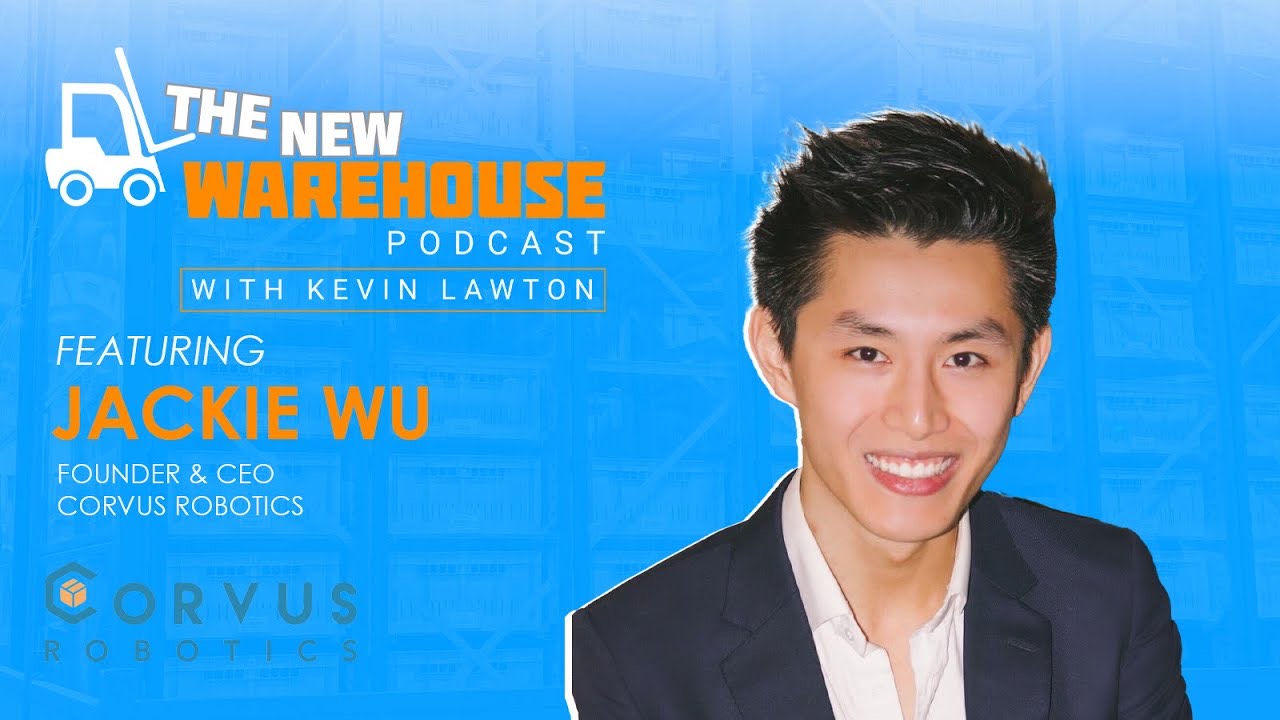
Autonomous Drone Inventory Management on The New Warehouse Podcast
Jackie Wu joins Kevin Lawton for episode 569, on building drones in California, deploying without beacons or markers, and what a counting pass surfaces beyond the count.
March 10, 2025